BUKHARA THE GREAT OASIS OF THE SILK ROUTE
Arriving in Bukhara felt like entering one of the true heartlands of the ancient Silk Route. Strategically located on a fertile oasis in the Zerafshan River delta, Bukhara became an essential resting point for merchants, travellers, and caravans crossing the vast Kyzyl Kum Desert and Kara Kum Desert.
For centuries, traders carrying silk, spices, precious stones, textiles, and ideas passed through this remarkable city, transforming it into one of the greatest commercial, cultural, and spiritual centres of Central Asia.
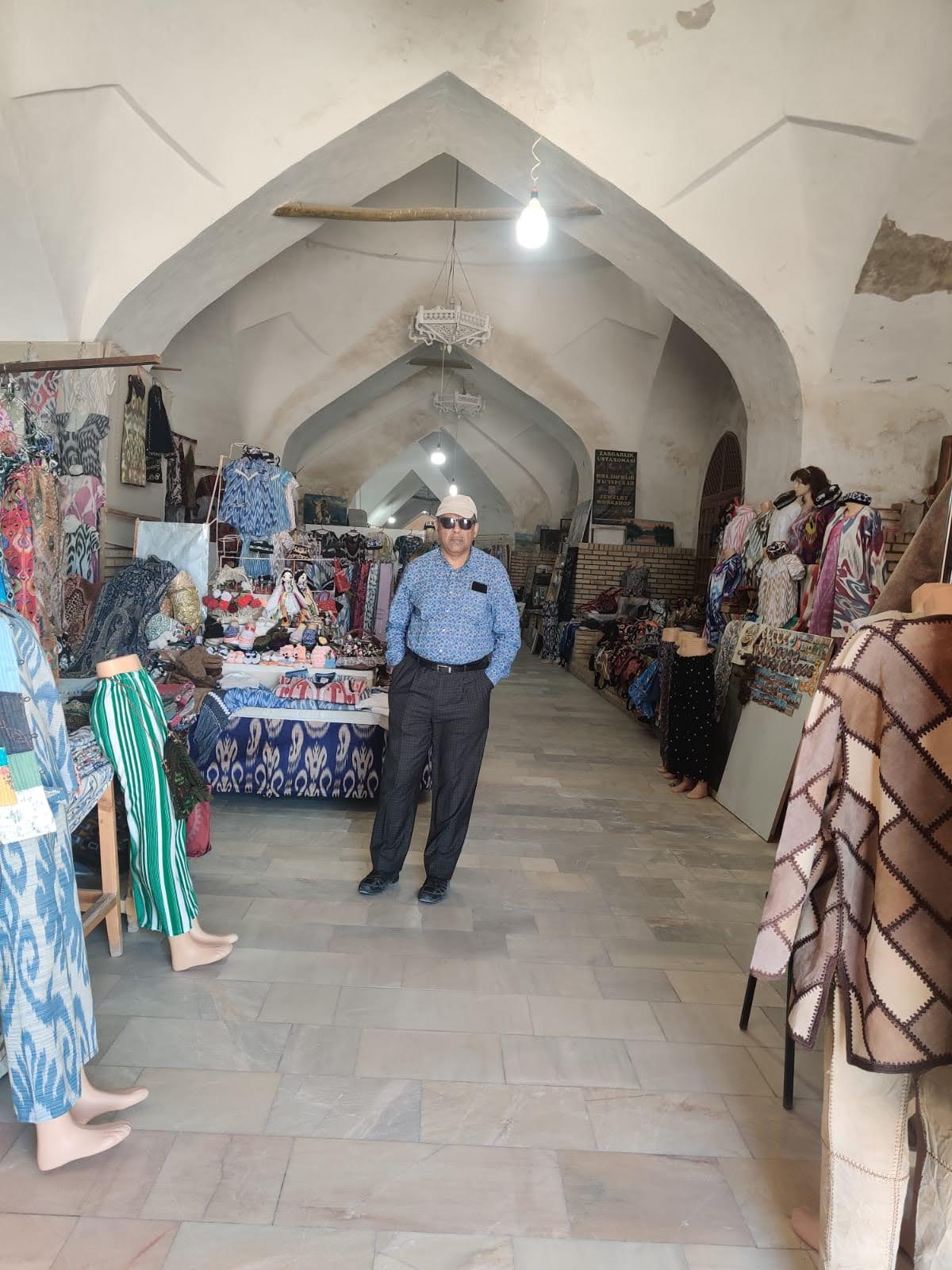
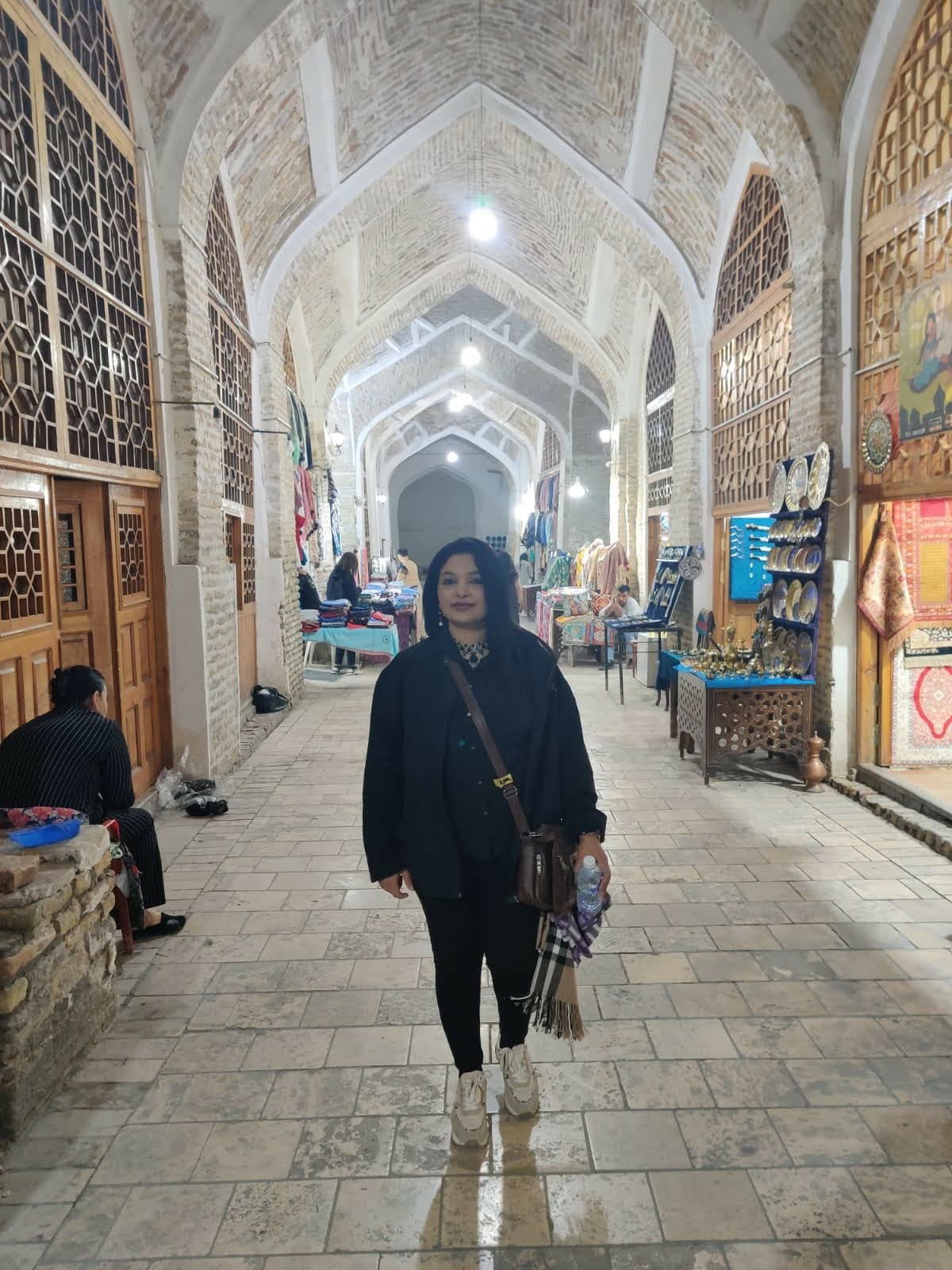
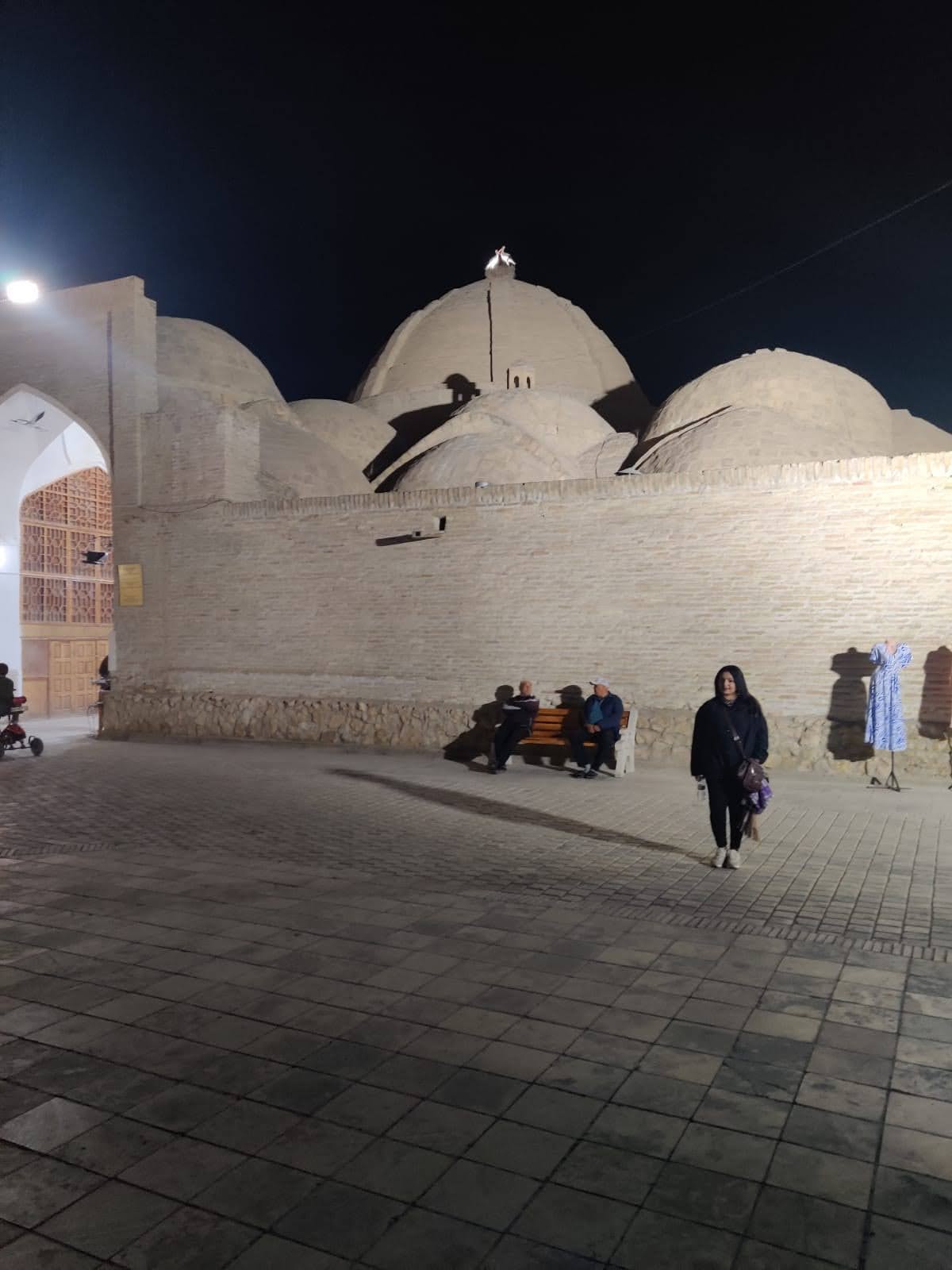
Walking through the old streets of Bukhara
Walking through the old streets of Bukhara, we could still sense the atmosphere of a timeless caravan town where cultures from Asia, Persia, the Middle East, and beyond once met and interacted. Ancient madrasas, mosques, domes, trading bazaars, and caravanserais continue to preserve the spirit of the Silk Route era.
Unlike many modern cities, Bukhara has managed to retain much of its historic charm, making our visit feel less like sightseeing and more like travelling back into history itself.
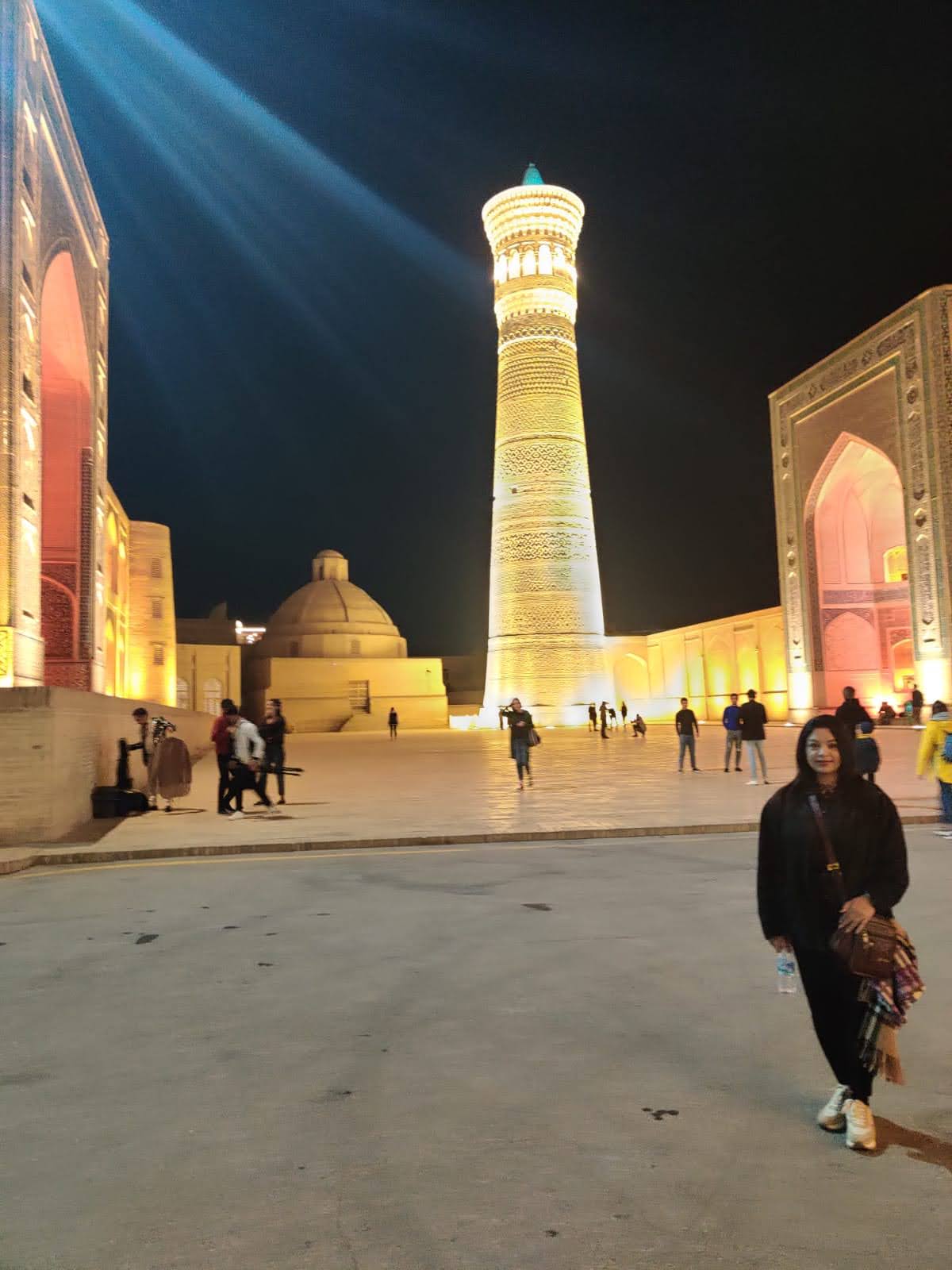
POI KALYAN —
THE HEART OF BUKHARA
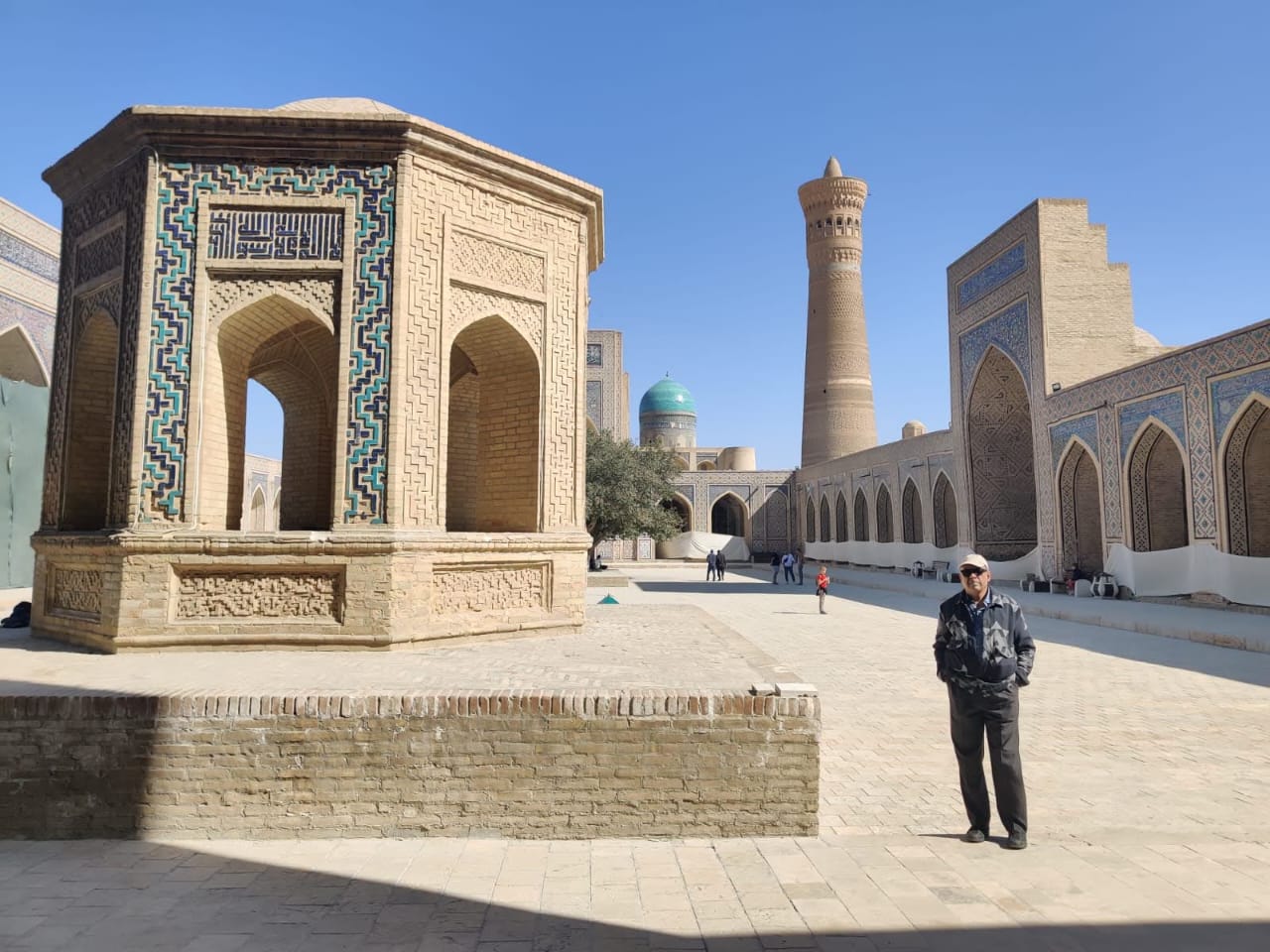
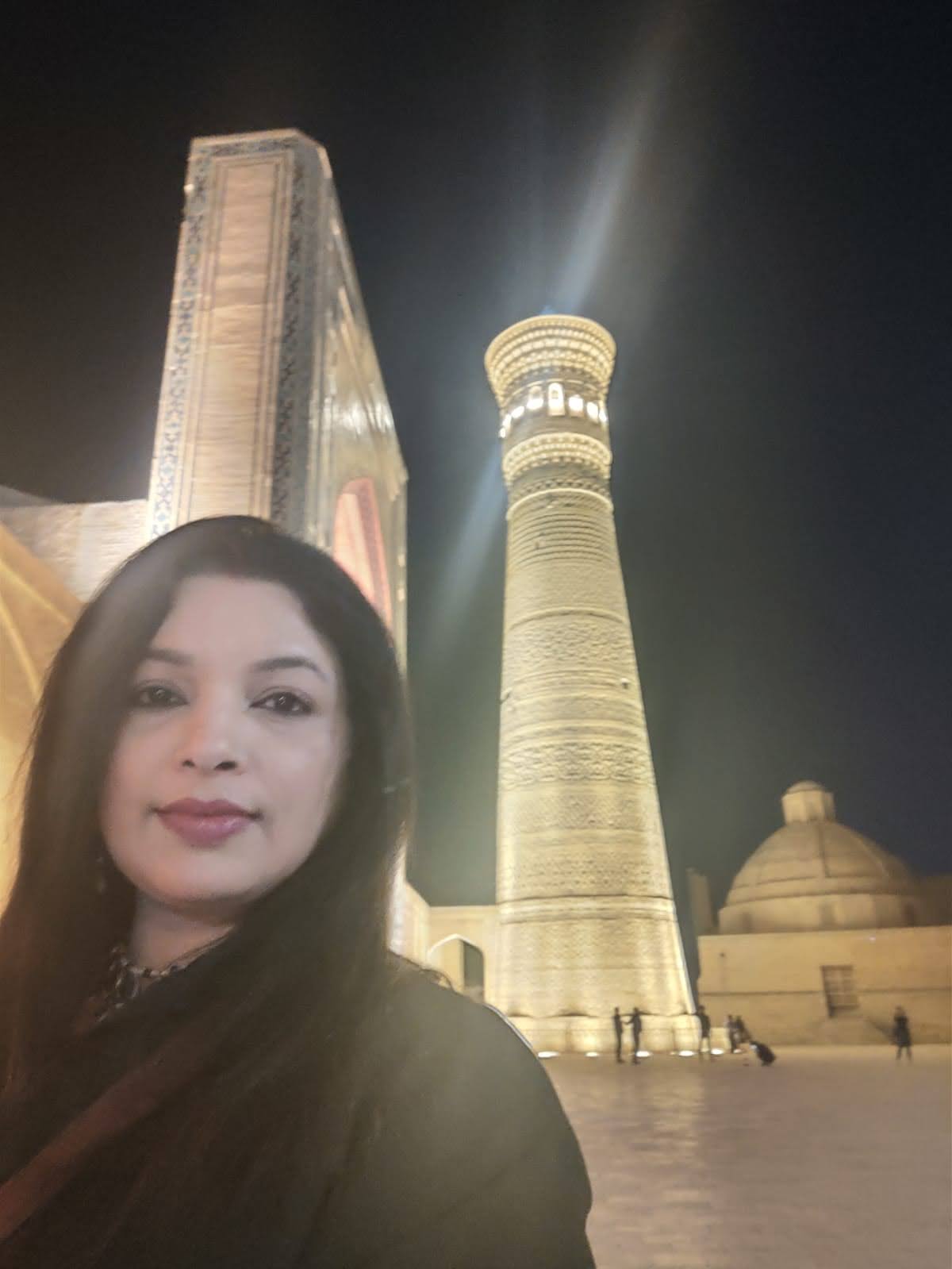
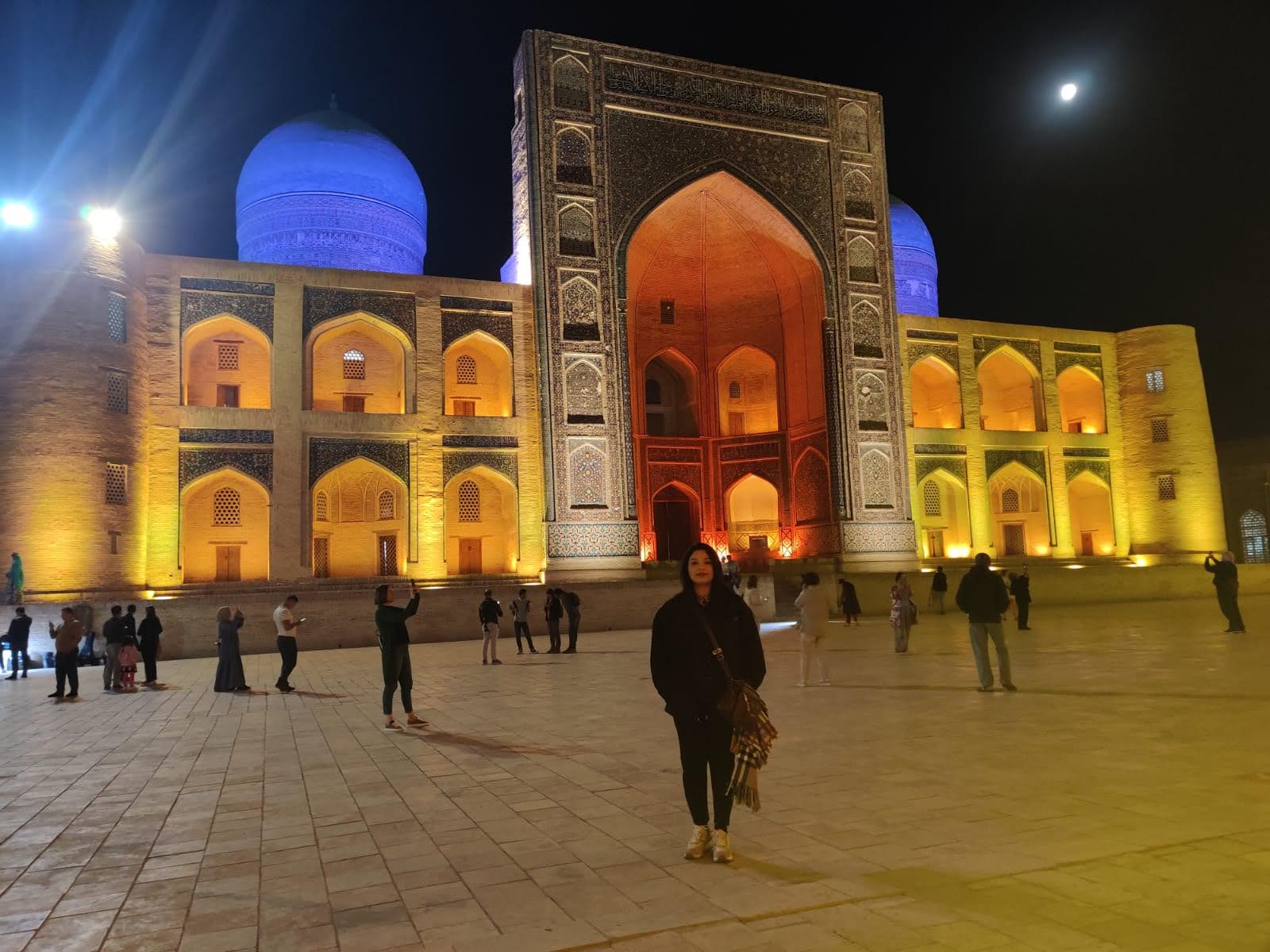
Our visit to the magnificent Poi Kalyan Complex in Bukhara was truly unforgettable. One of the most iconic historical settings in the city, the complex includes the towering Kalyan Minaret, the grand Kalyan Mosque, the famous Mir-i-Arab Madrasah, and the Emir Alim Khan Madrassah.
Each monument displayed stunning mosaics, colourful tile work, and beautifully detailed Islamic architecture that reflected the artistic brilliance of the Silk Route era.
Standing amidst these grand structures, especially in the soft evening light, we could truly feel the timeless atmosphere and historical importance of ancient Bukhara.
CHOR MINOR — FOUR MINARETS OF BUKHARA
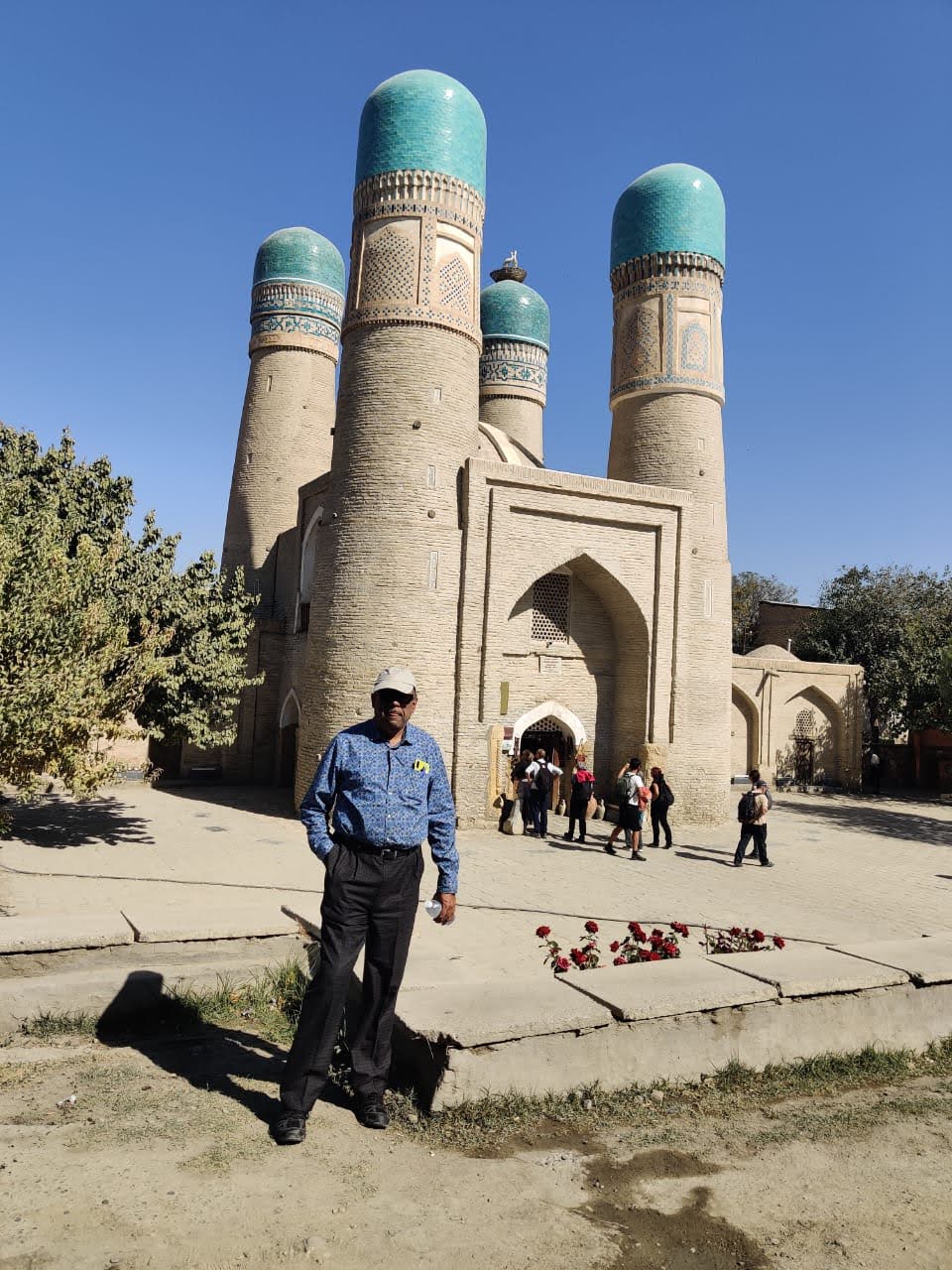
One of the most unusual monuments we visited in Bukhara was the charming Chor Minor madrasah near Lyabi-Khauz. Meaning “Four Minarets,” the structure is famous for its four beautifully decorated towers crowned with blue domes, each designed differently from the others.
The decorative styles are believed to symbolically reflect philosophical ideas connected to the world’s major religions.
As Indian travellers, we were immediately reminded of the famous Charminar. Though very different in scale, both monuments share the striking concept of four minarets and beautifully reflect the cultural and architectural connections that once spread across Asia through the ancient Silk Route.
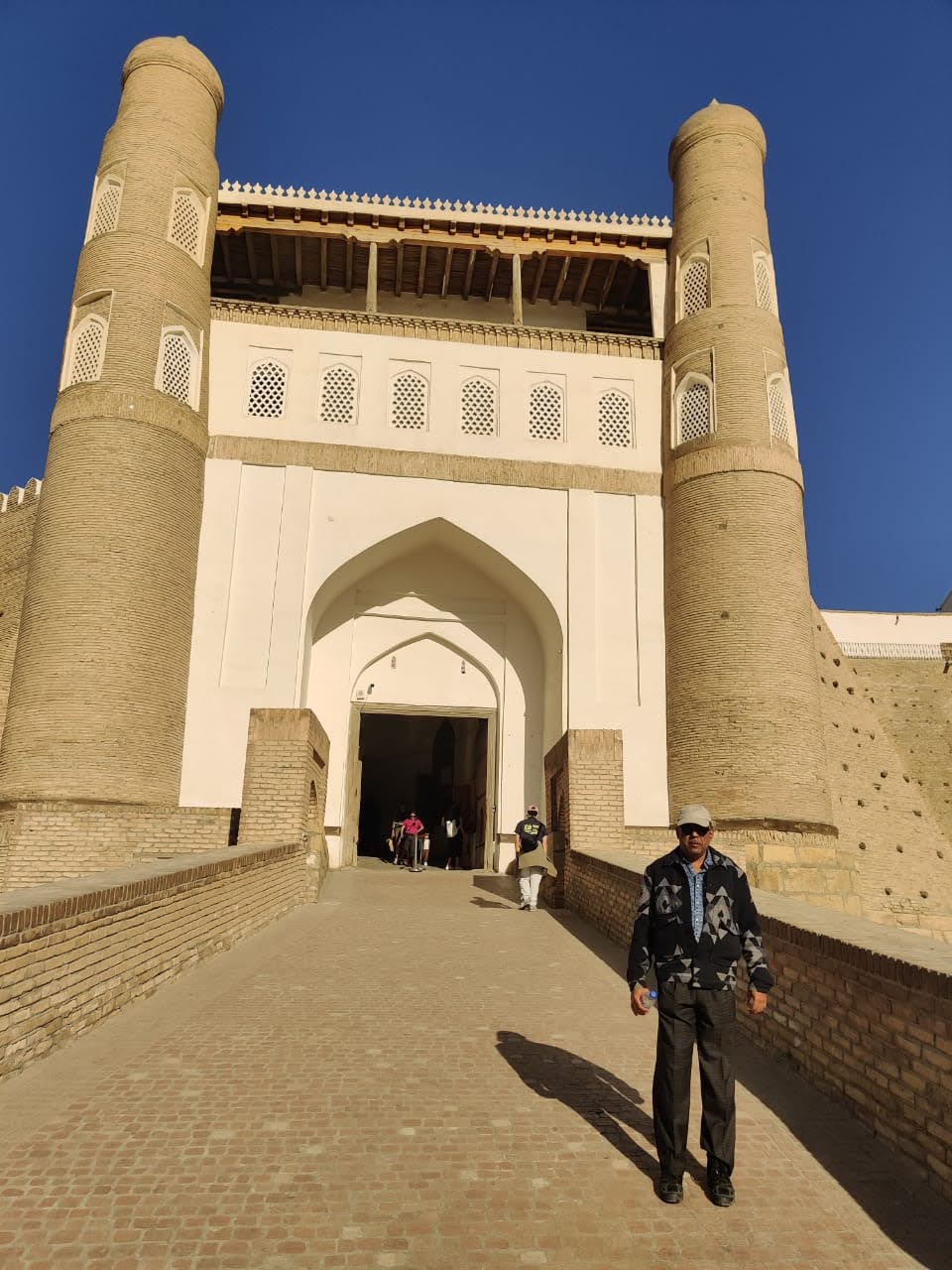
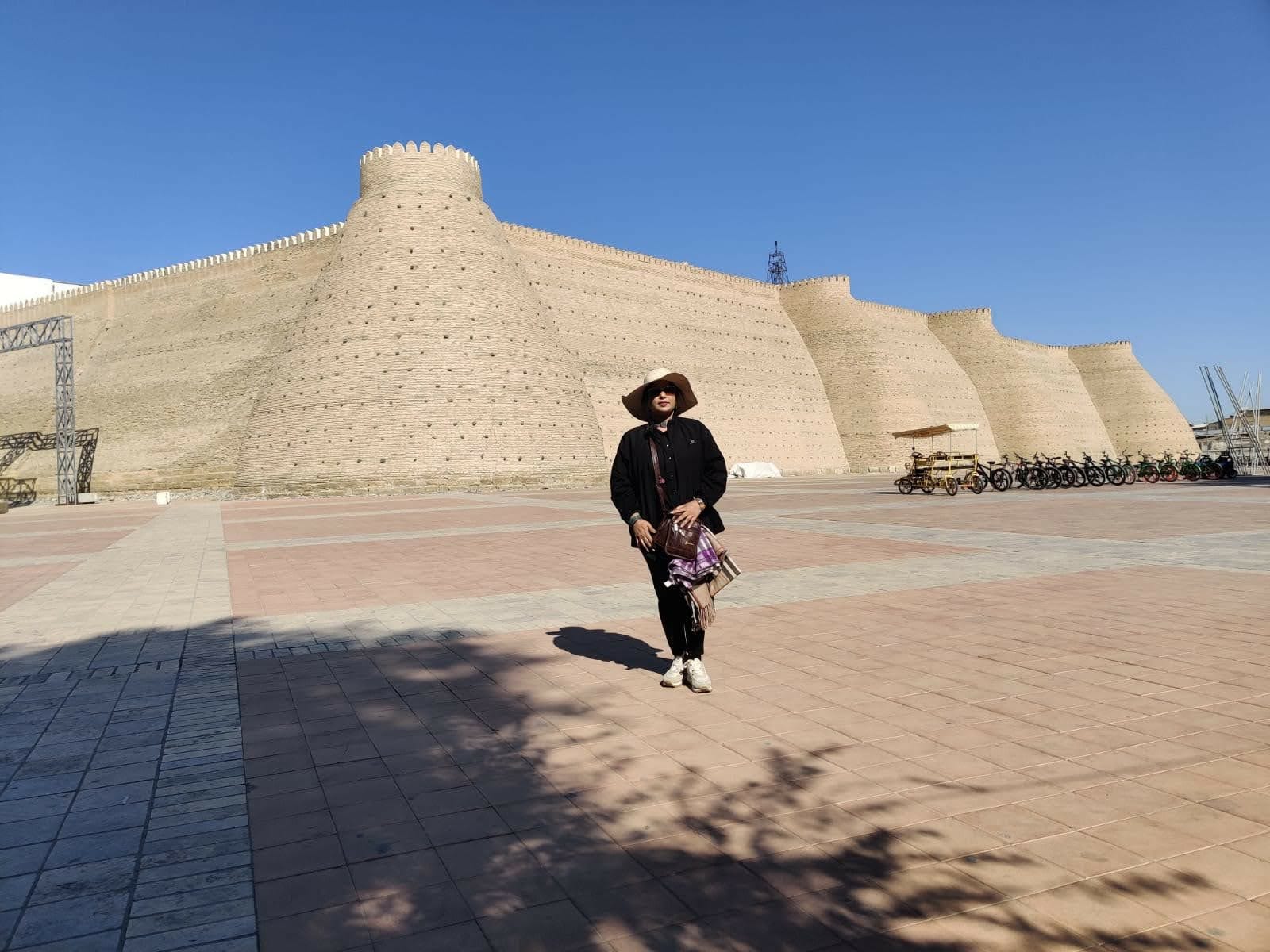
THE ARK OF BUKHARA - A CITY WITHIN A CITY
Visiting the ancient Ark of Bukhara was like stepping directly into the heart of Central Asian history. Dating back to the 5th century, this massive fortress is considered the oldest structure in Bukhara and remained continuously inhabited for centuries until the invasion of the Red Army in 1920.
Once home to more than 3,000 people, the Ark served not only as the residence of the Bukharan emirs but also housed government officials, poets, scholars, libraries, royal courts, stables, and administrative offices.
Walking through the fortress, we could truly sense how it once functioned as a complete city within a city, standing as the political, cultural, and intellectual centre of Bukhara during the great Silk Route era.
BOLO HAOUZ MOSQUE — FACING THE ARK
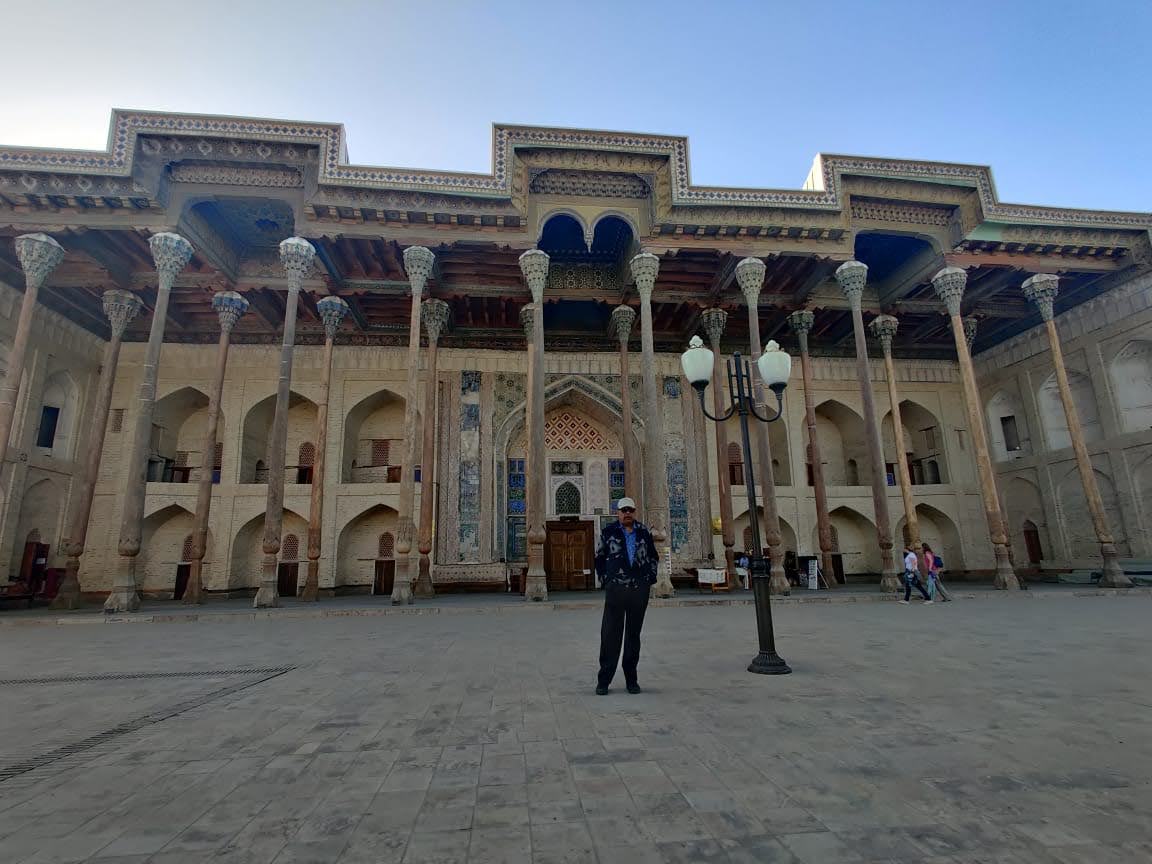
Just opposite the Ark of Bukhara stands the elegant Bolo Haouz Mosque, built in 1712 in traditional Uzbek style. Known for its graceful wooden pillars reflected in the pool in front, it was once used for Friday prayers by the Emir.
The mosque's beautifully carved wooden columns and richly decorated entrance showcase the remarkable craftsmanship of Bukhara’s master artisans.
Often called the “Mosque of Forty Pillars,” it remains one of the most peaceful and atmospheric landmarks in the city, preserving the spiritual character and architectural elegance of old Bukhara.
SITORAI-MOKHI KHOSA —THE PALACE OF MOON LIKE STARS
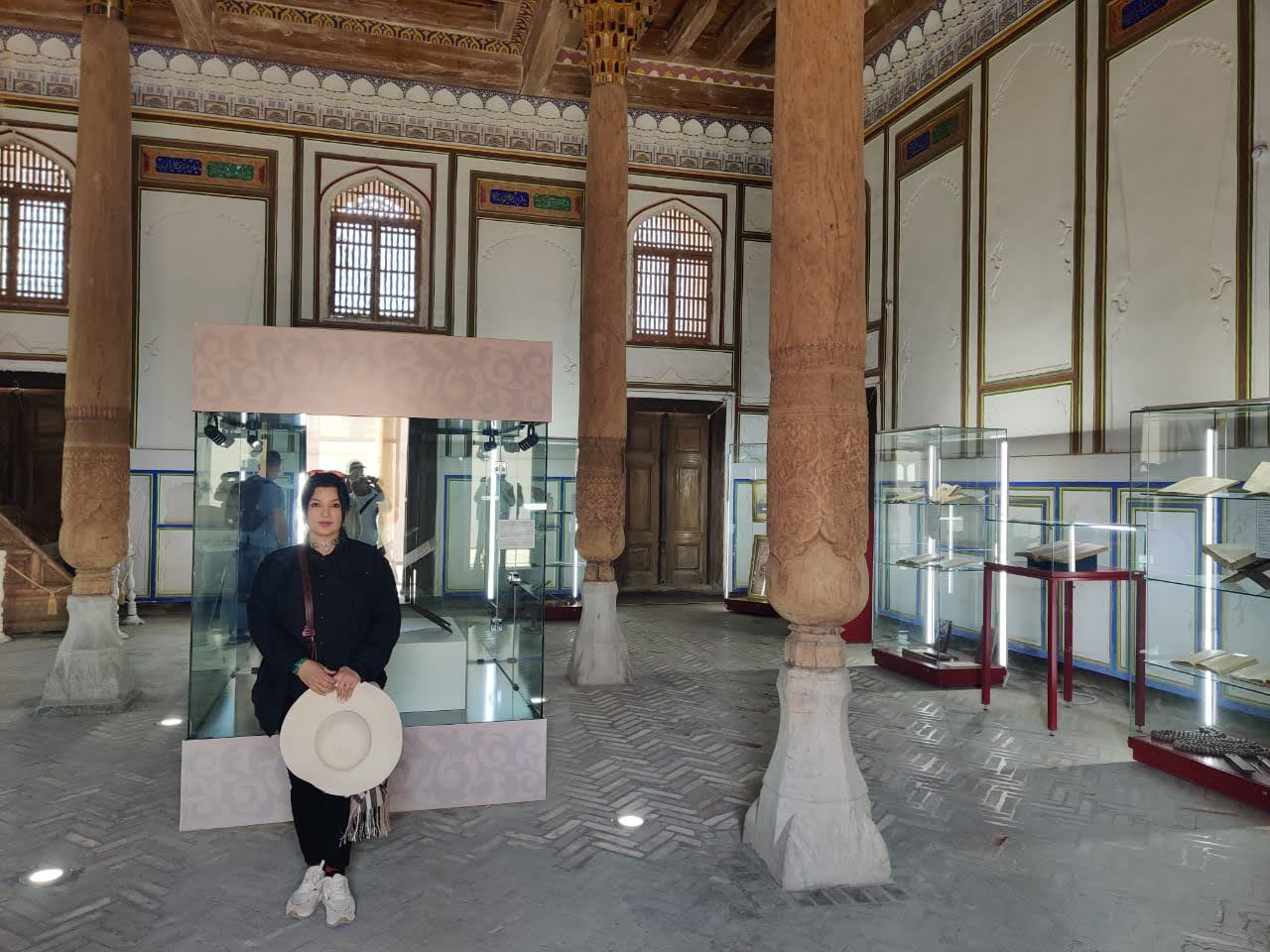
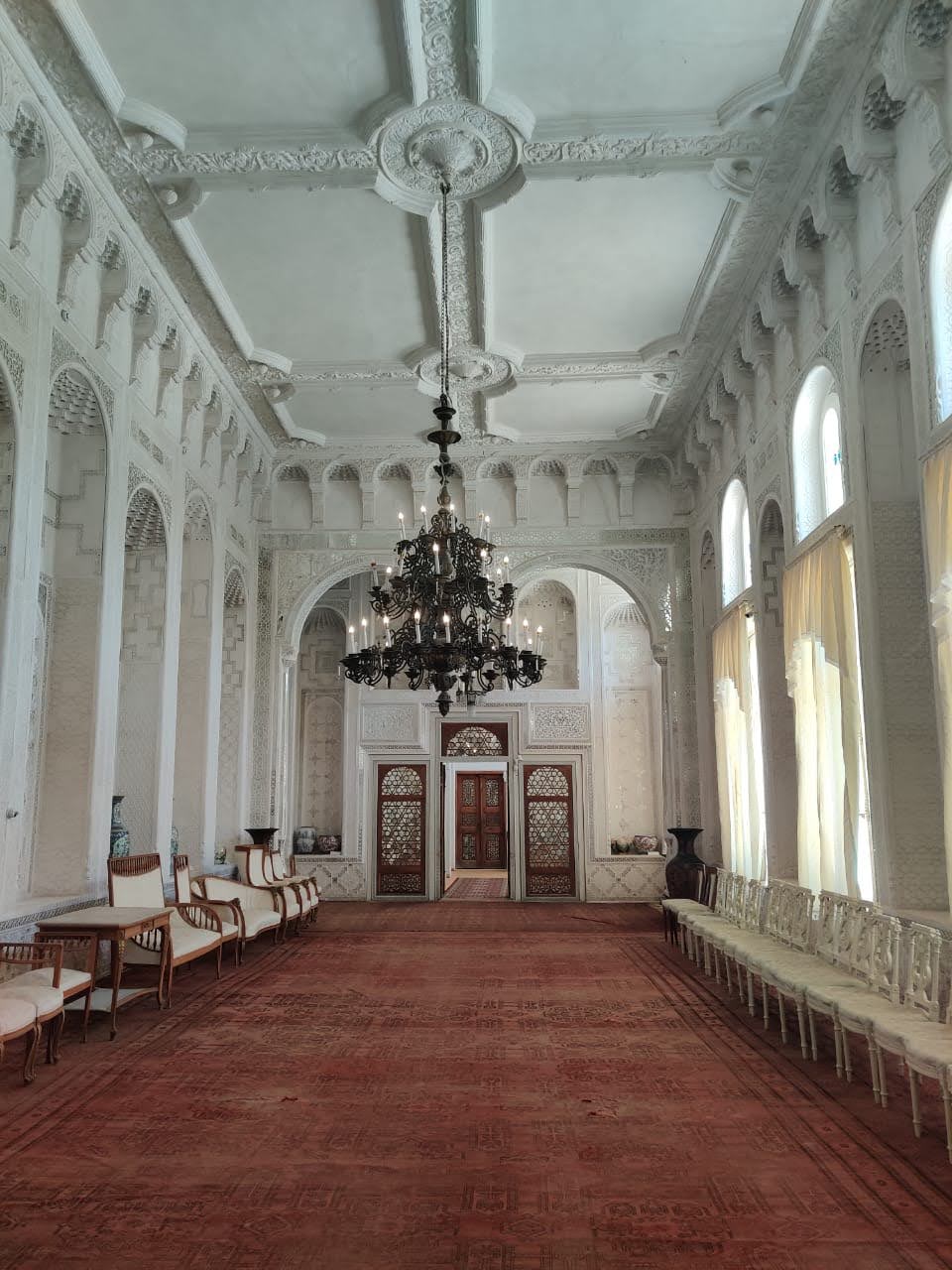
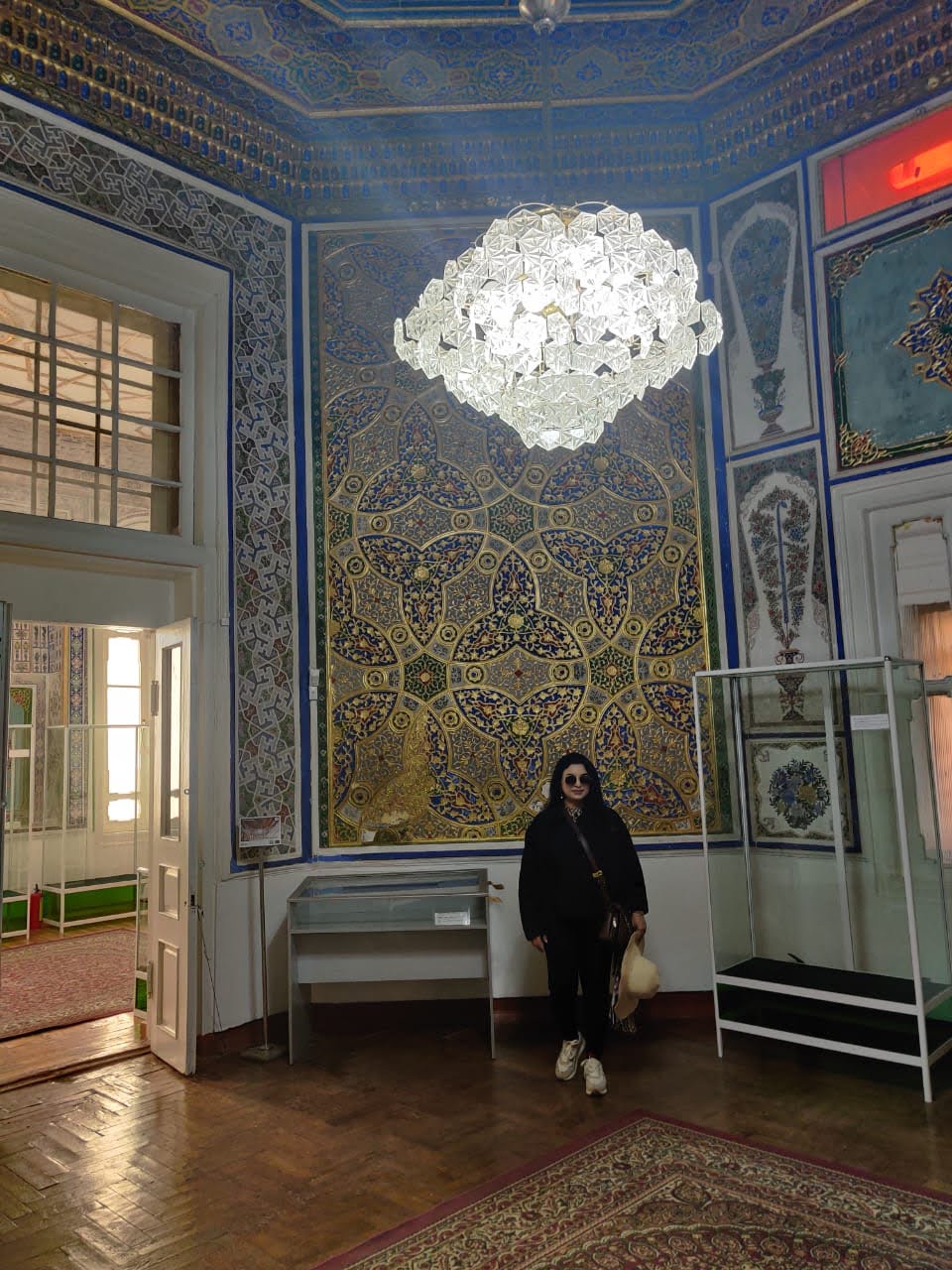
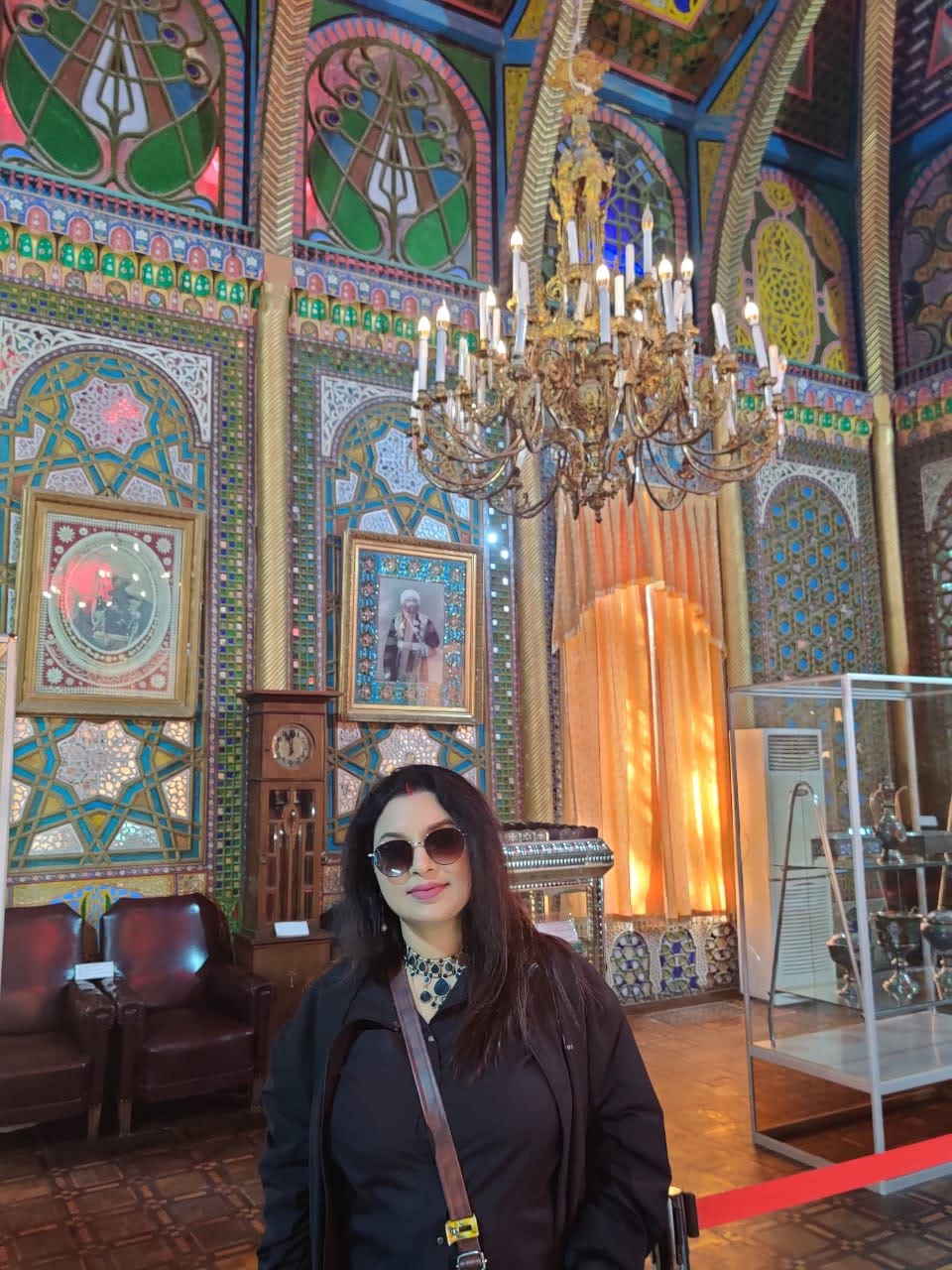
Our visit to the beautiful Sitorai-Mokhi Khosa Palace near Bukhara was a graceful change of pace from the city’s mosques and madrasas. Known as the “Palace of Moon-like Stars,” it once served as the summer residence of the Emir of Bukhara.
Built between the late 19th and early 20th centuries, the palace reflects a fascinating blend of Uzbek, Russian, and European architectural influences.
Today it functions as a museum of decorative and applied arts. Walking through its elegant rooms and beautifully decorated halls, we could sense the refined lifestyle of the emirs and the unique cultural fusion that shaped the final days of Bukhara’s royal era.
BABAYCHIK —A SOUVENIR FROM BUKHARA
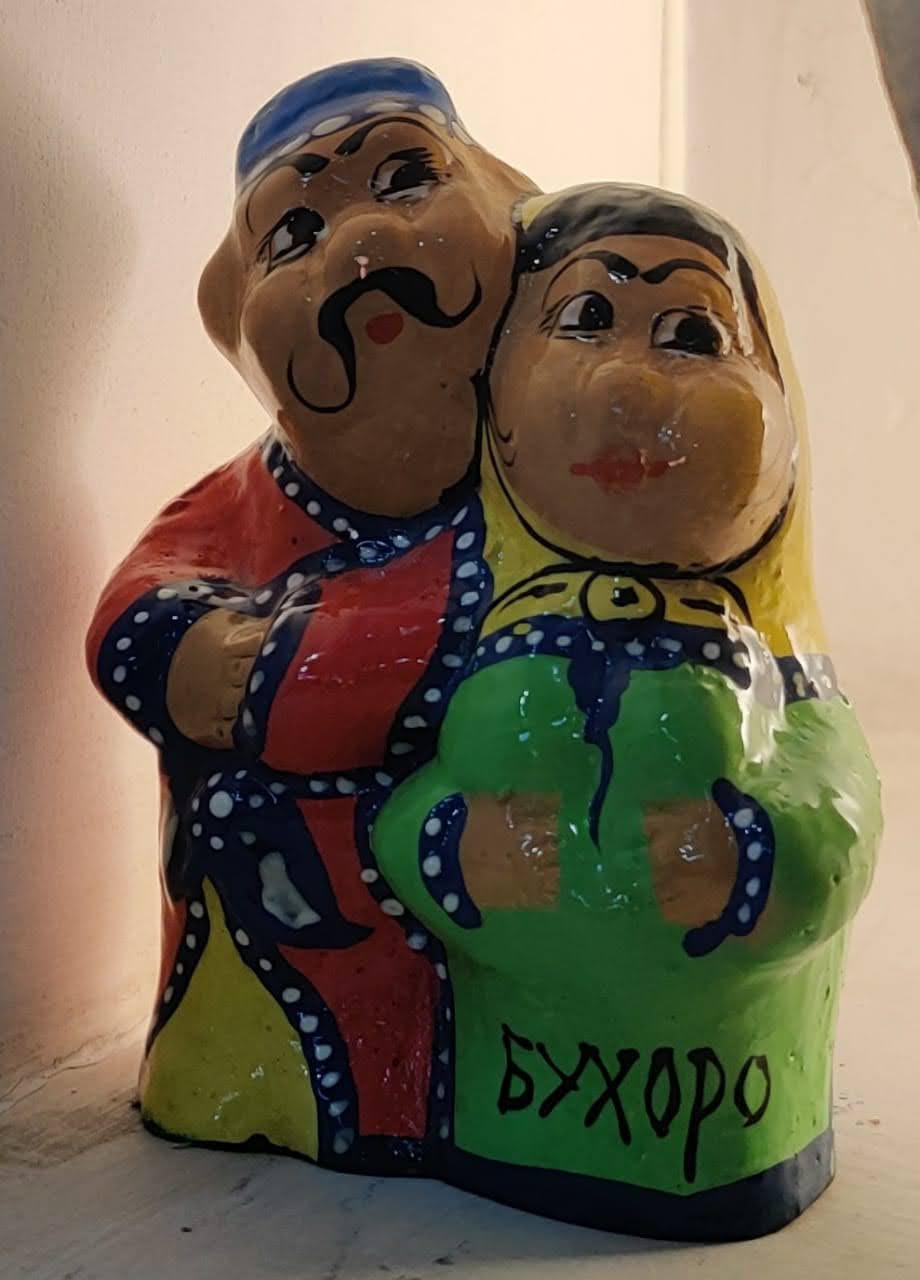
During our time in Bukhara, we came across a beautiful hand-painted ceramic figurine known as a Babaychik, a traditional folk-art piece deeply rooted in Uzbek culture.
Made from clay and often inscribed with “бухоро” (Bukhara) at the base, it typically depicts a couple dressed in vibrant regional attire. The figurine reflects warmth, humour, and the famous Central Asian spirit of hospitality.
We were told that this charming couple represented “Wanderers at 50” — a joyful symbol of lifelong companionship, travel, and shared adventures.
BUKHARA:WHERE THE SILK ROAD STILL LIVES
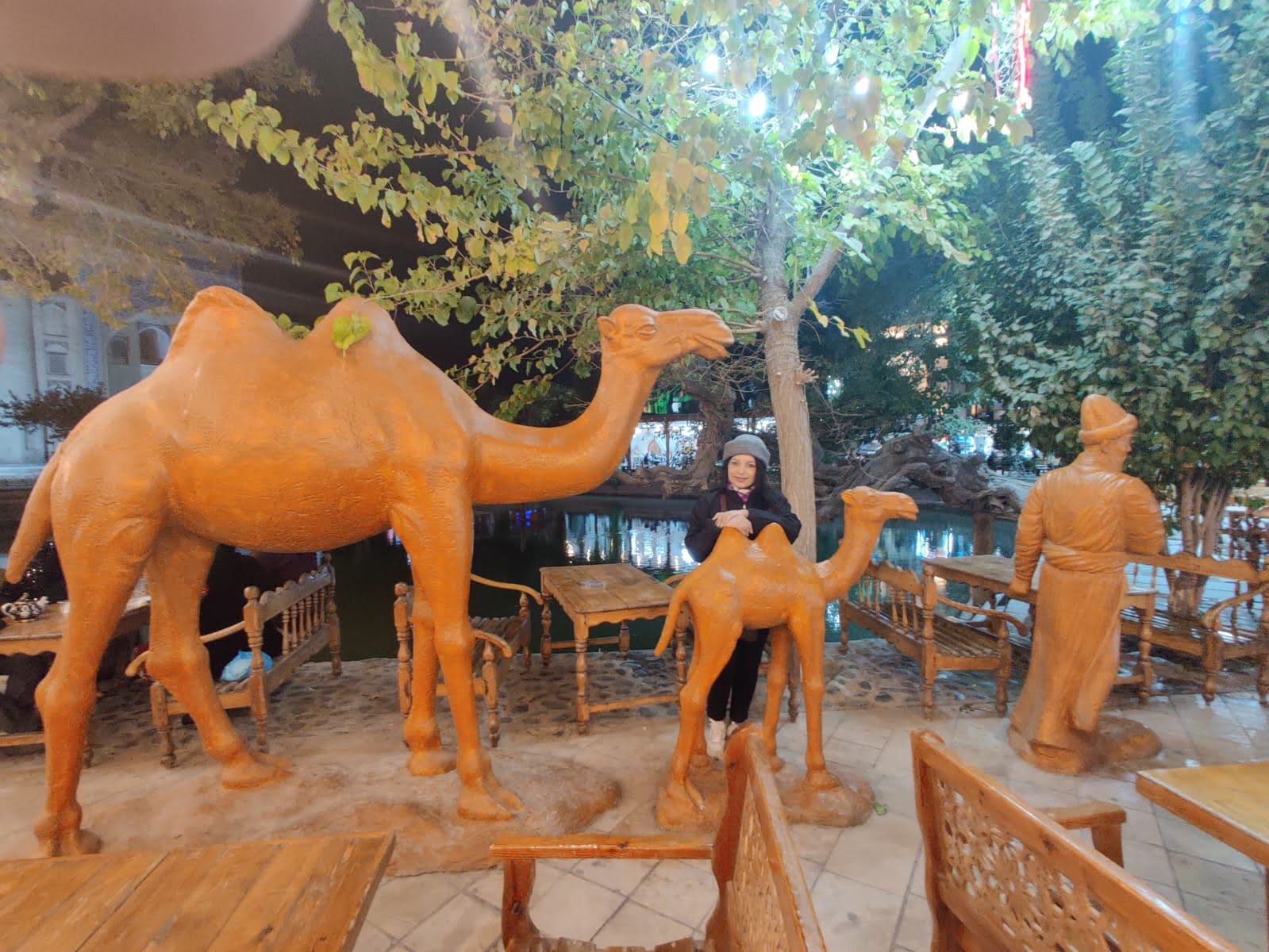
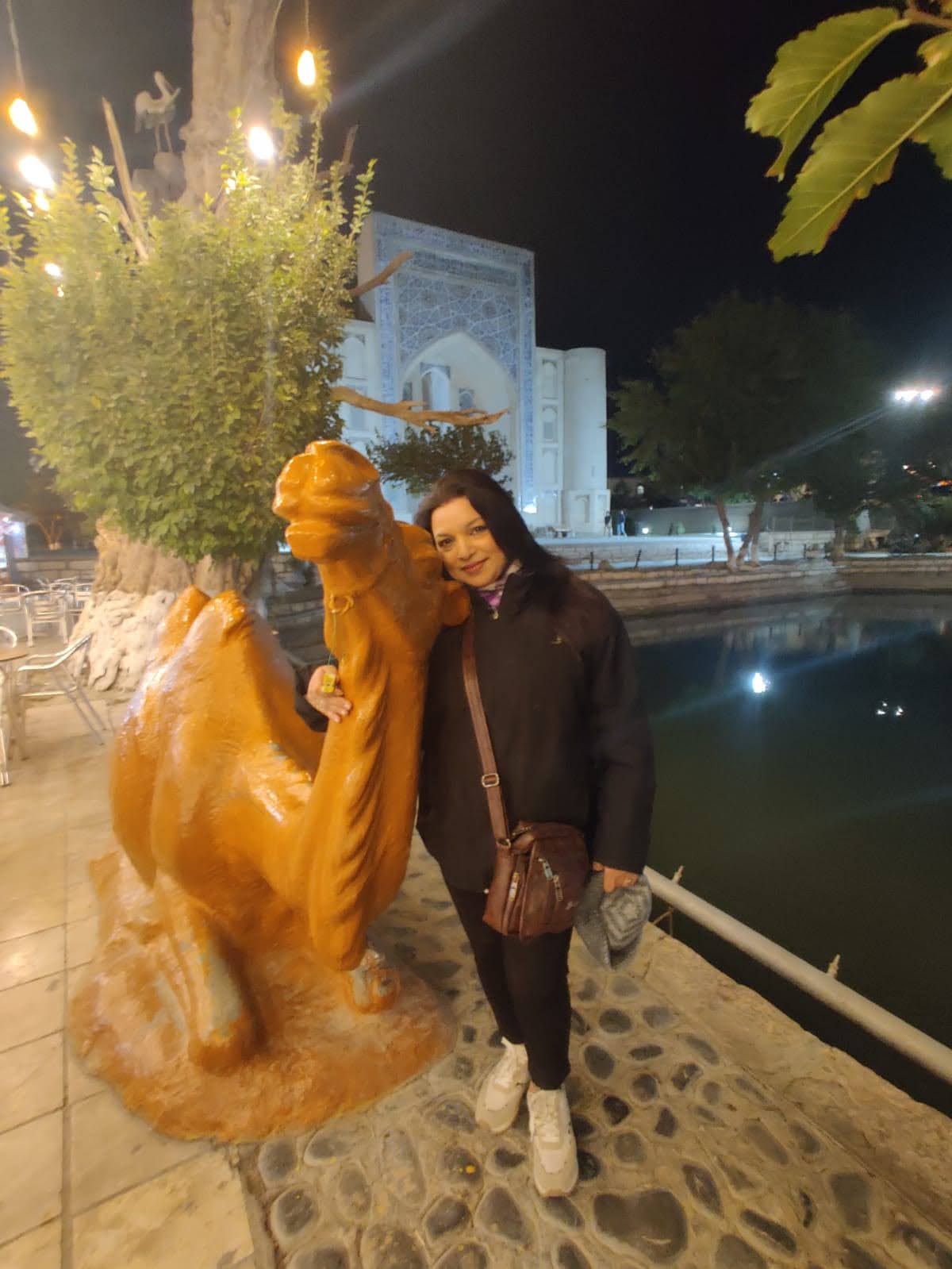
One of the most fascinating aspects of Bukhara is how deeply the city embraces its Silk Road heritage. Restaurants, teahouses, and courtyards are adorned with camel caravans, desert scenes, and trading motifs, creating an atmosphere that transports visitors back centuries.
From decorative murals and statues to traditional caravanserai-style settings, the Silk Road theme appears almost everywhere. Rather than feeling repetitive, it serves as a constant reminder that Bukhara was once one of the world's great crossroads.
Here, the Silk Road is not merely history—it remains an integral part of the city's identity and charm, continuing to welcome travellers from distant lands just as it did centuries ago.
SHASHLIK & UZBEK BREAD — SIMPLE PLEASURES
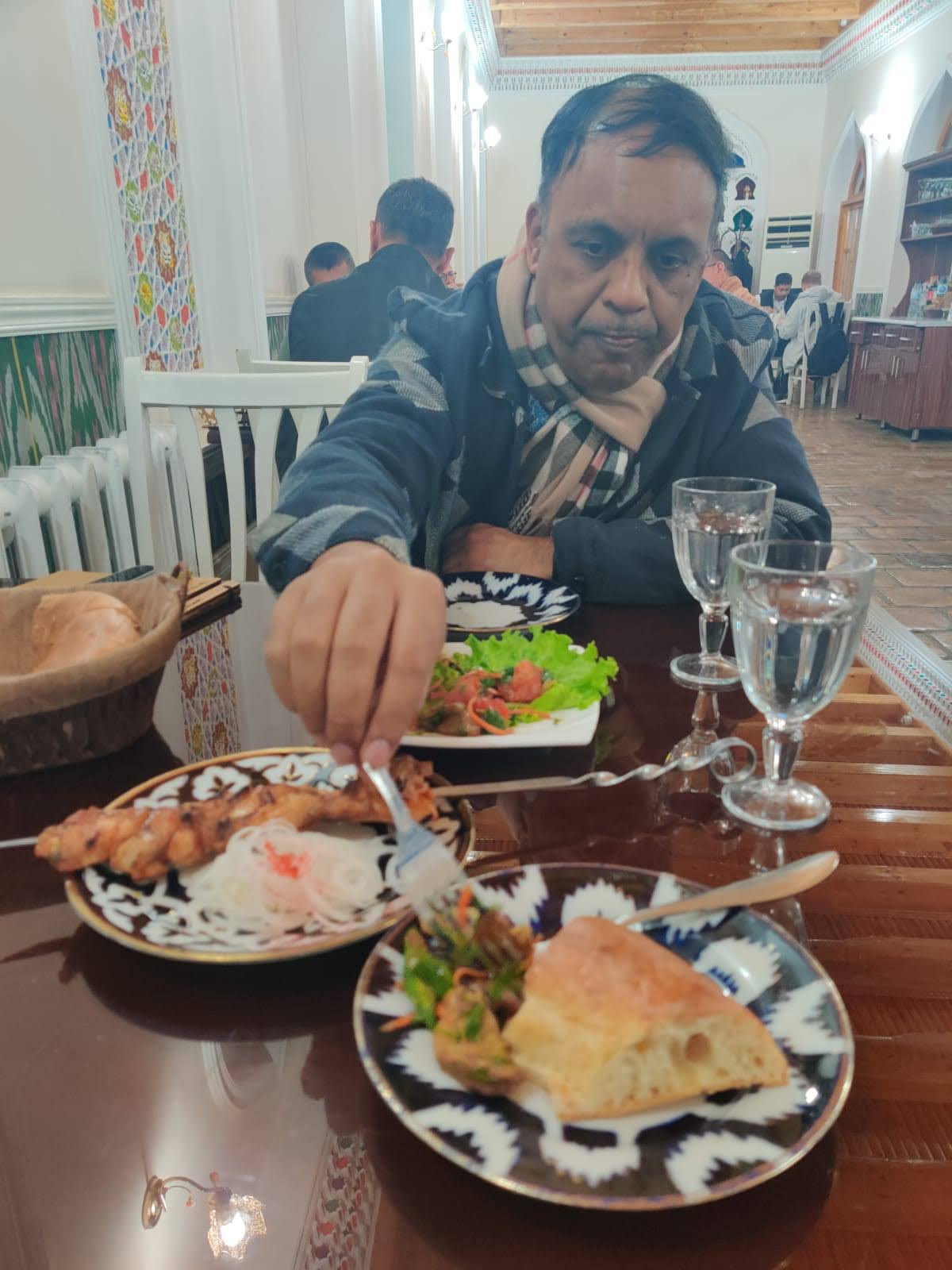
One of the most enjoyable food experiences during our journey through Uzbekistan was eating freshly grilled shashlik with warm Uzbek bread. Found everywhere from bustling bazaars to family-run restaurants, this simple meal perfectly captures the country's rich culinary traditions.
The smoky, tender skewers paired beautifully with the soft, freshly baked bread that remains a staple across Uzbekistan. Every bite reflected generations of tradition, hospitality, and pride in local ingredients.
Whether enjoyed in a lively market or a quiet dining room, shashlik and Uzbek bread offered a delicious reminder that some of the most memorable travel experiences come from the simplest meals.
Navigate the Caravan Route
Read Next: Other Dispatches
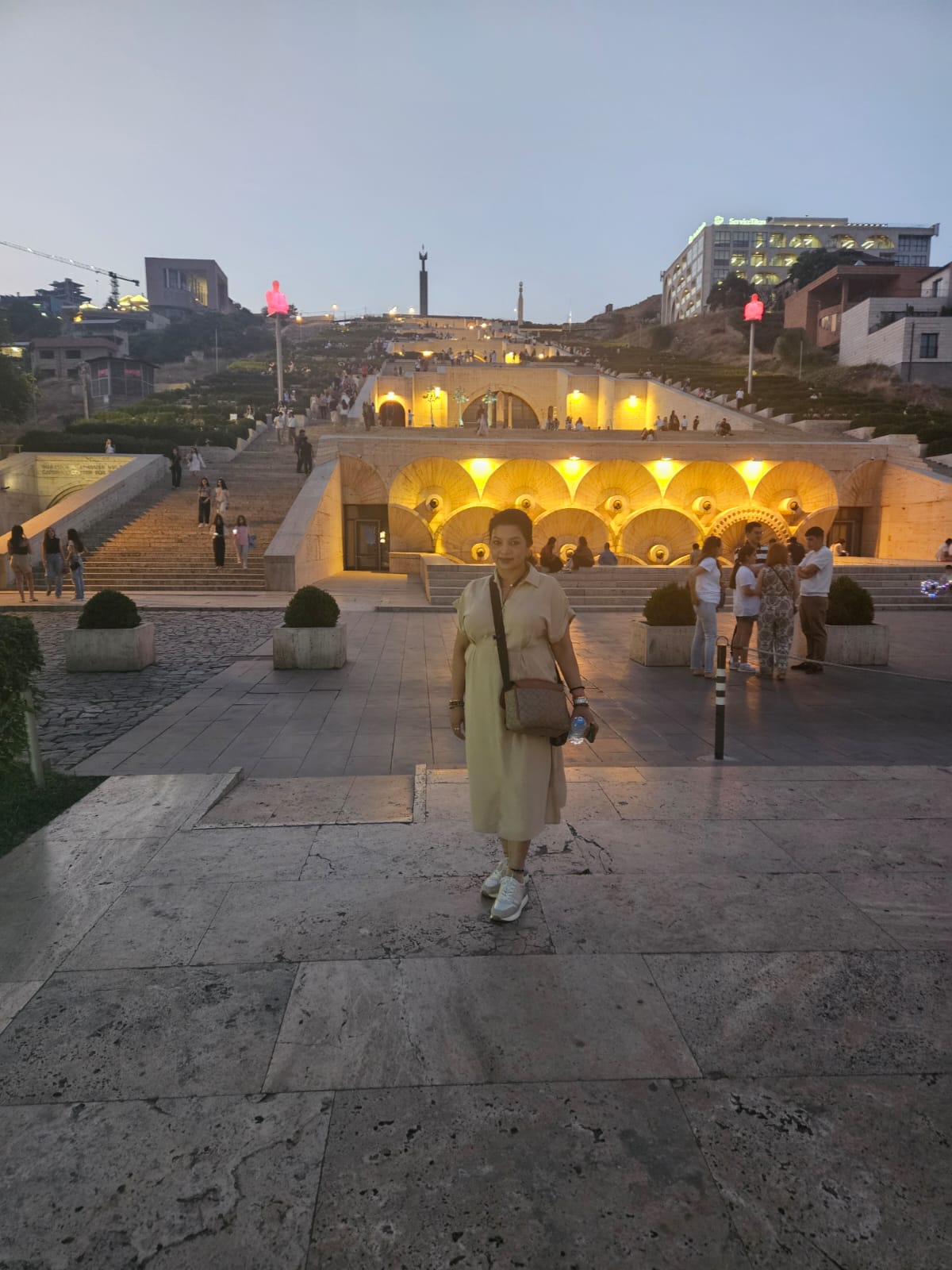
Yerevan
An ancient city that prospered from trade flowing between Persia, the Caucasus, and the Silk Road.
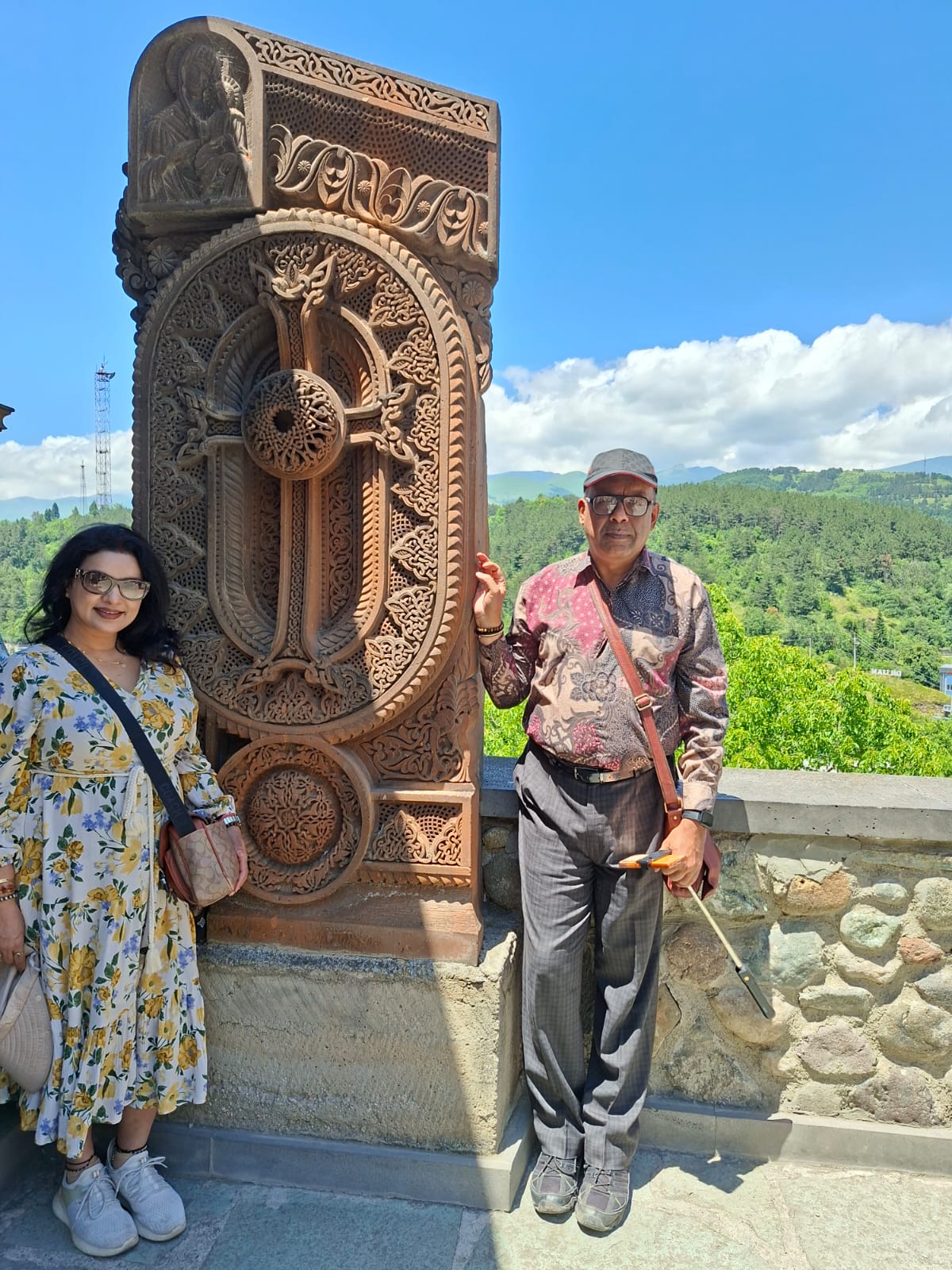
Dilijan
A forested retreat along ancient merchant routes connecting Armenia with neighboring Silk Road lands.
Get the complete Field Notebooks in your inbox
Subscribe to receive weekly dispatches detailing train logistics, border crossing forms, and historical accounts from our future travels.