SHAKHRISABZ THE GREEN CITY OF TIMUR
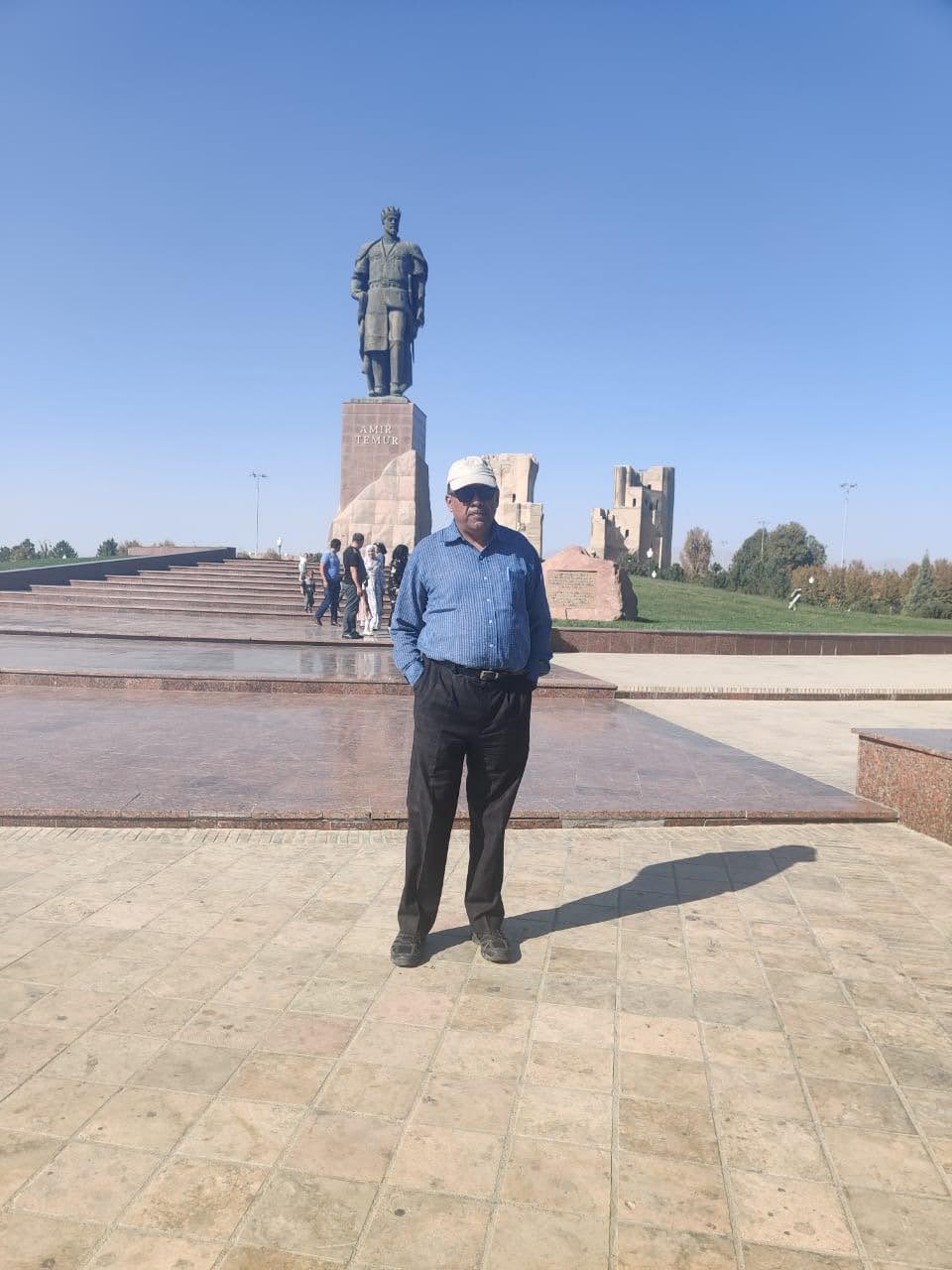
Our journey to Shahrisabz, the birthplace of the legendary conqueror Timur, felt like stepping deeper into the rich history of the Silk Route.Once envisioned as a magnificent imperial city of the Timurid Empire, Shahrisabz still carries an atmosphere of grandeur and historical importance.
Meaning “Green City,” Shahrisabz is surrounded by fertile landscapes that create a striking contrast with the massive historic monuments rising from its ancient heart. Walking through the city, we could sense the legacy of Timur everywhere — from the impressive palace ruins to the timeless streets that once welcomed Silk Route travellers, merchants, and scholars.
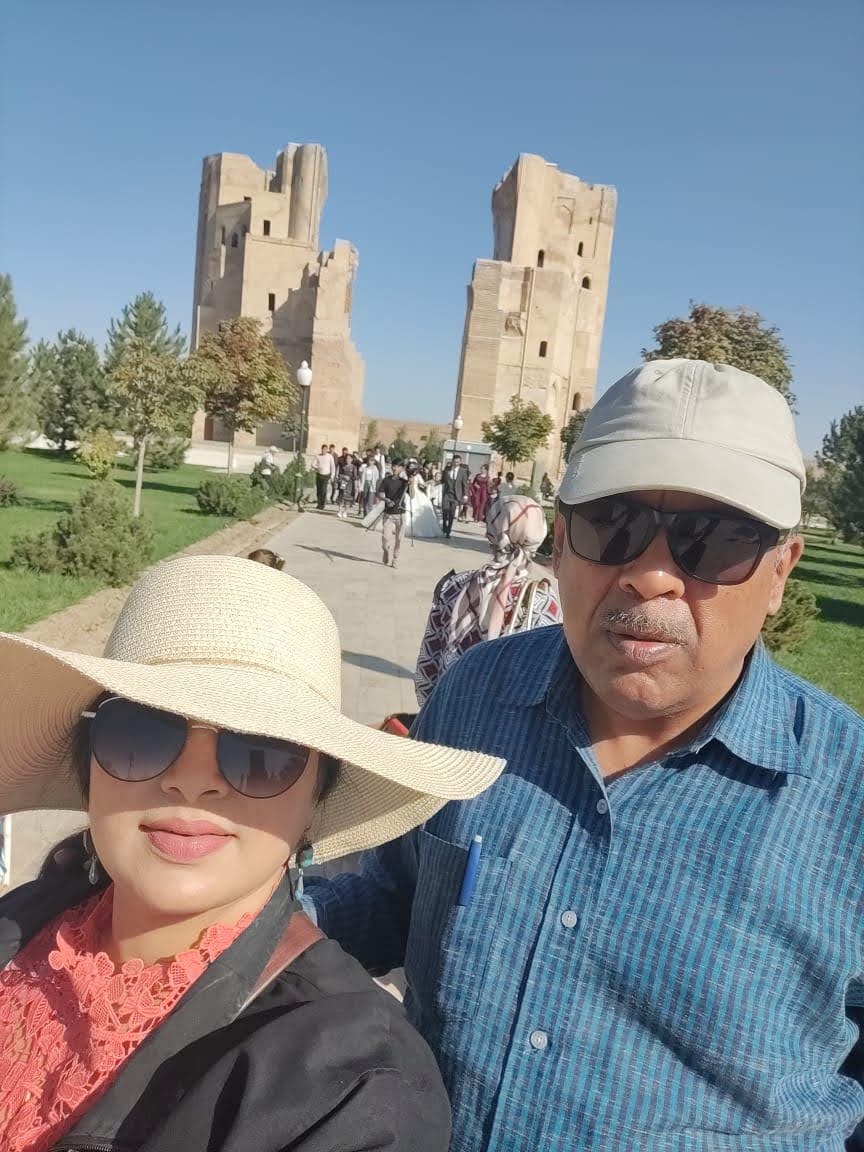
Ak-Saray Palace
The towering structures behind are the 14th-century ruins of Ak-Saray Palace in Shahrisabz, a grand summer residence built by the conqueror Amir Timur and preserved today as part of a UNESCO World Heritage Site.I must admit that I was somewhat disappointed to discover that very little of the original palace survives. All that remains today is the magnificent façade — essentially two towering walls, offering only a glimpse of what was once one of the most spectacular palaces of the Timurid Empire.
THE PLATEAU OF DEMONS
SHAITAN ZHIGA
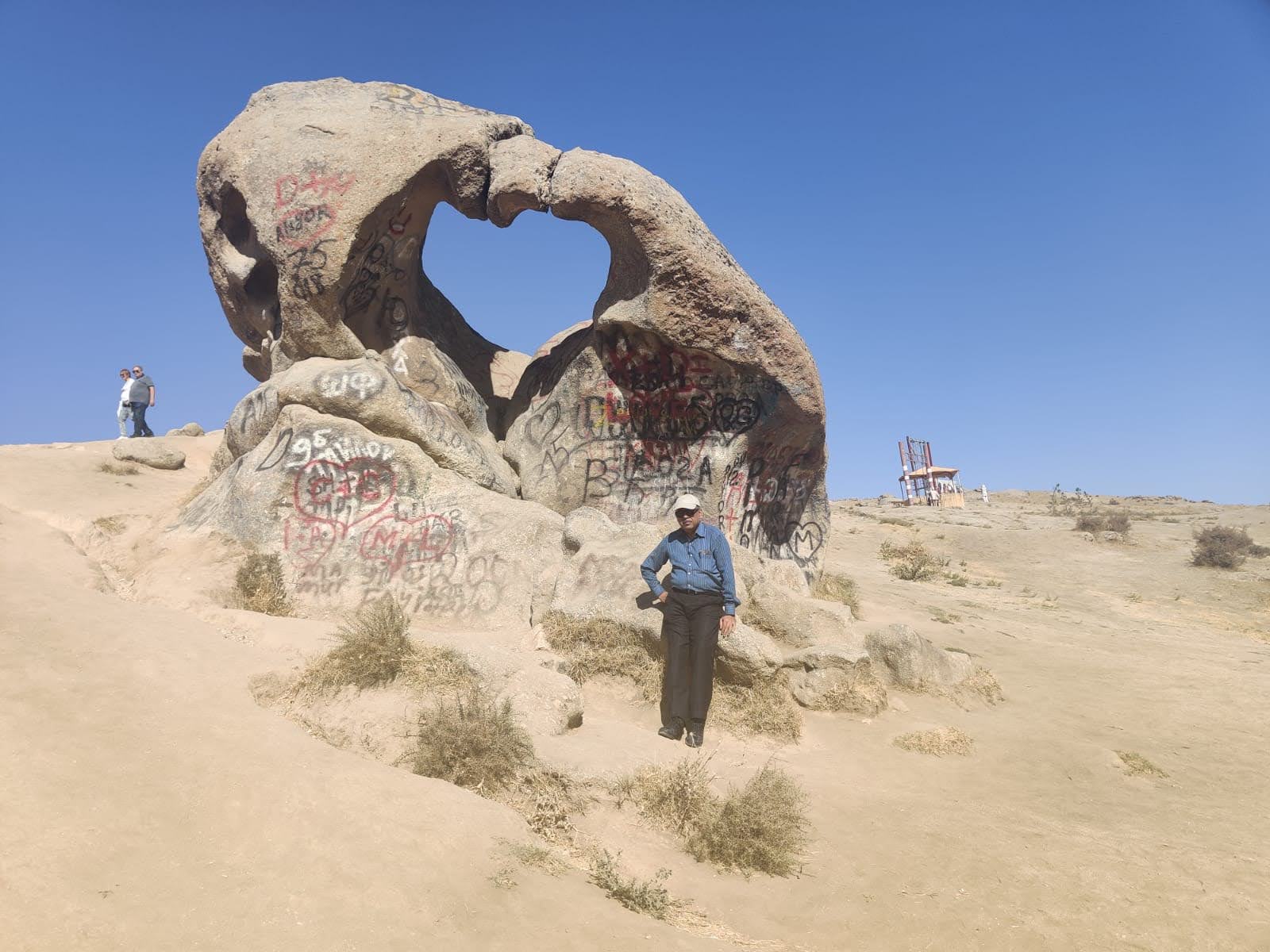
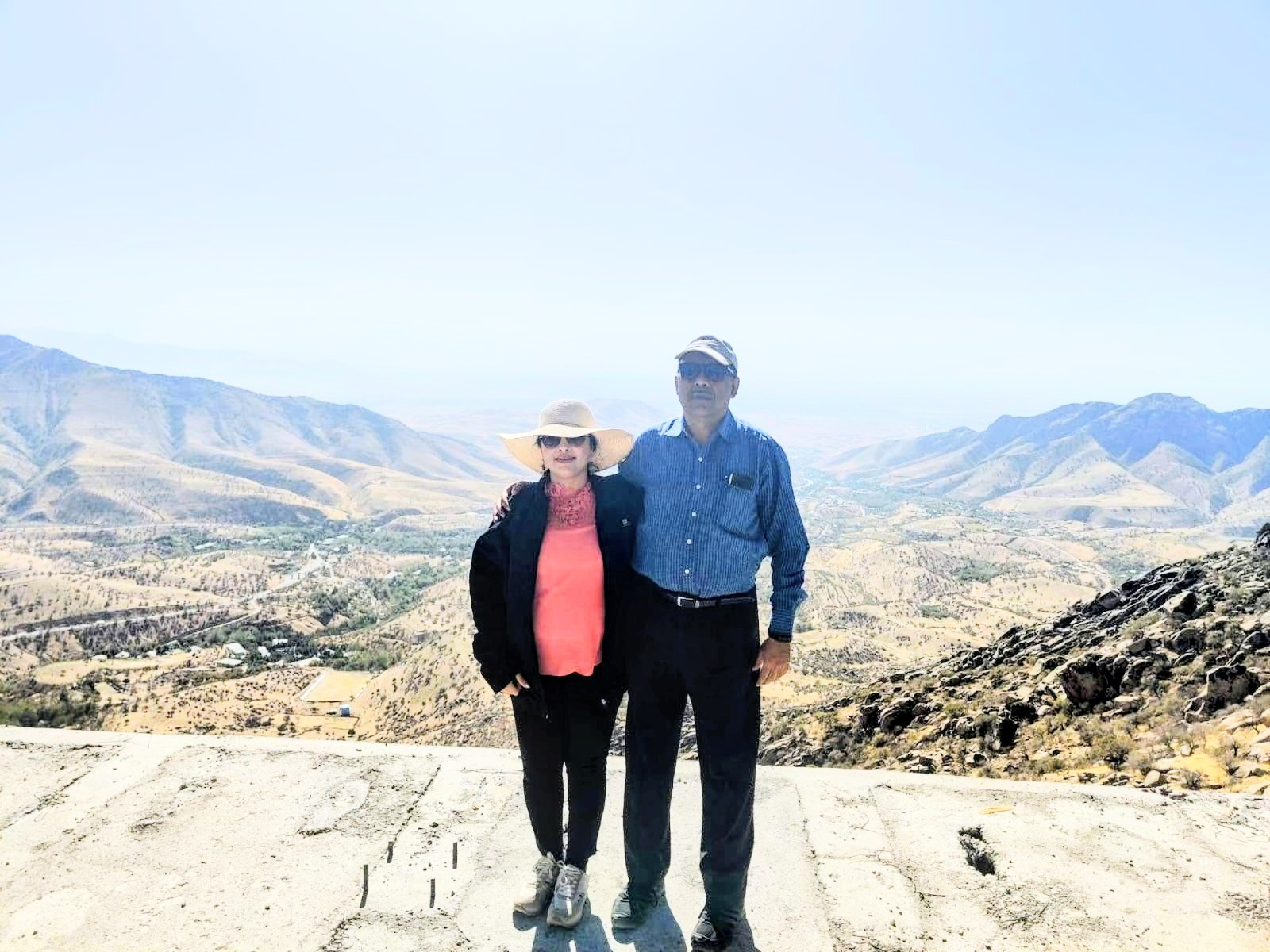
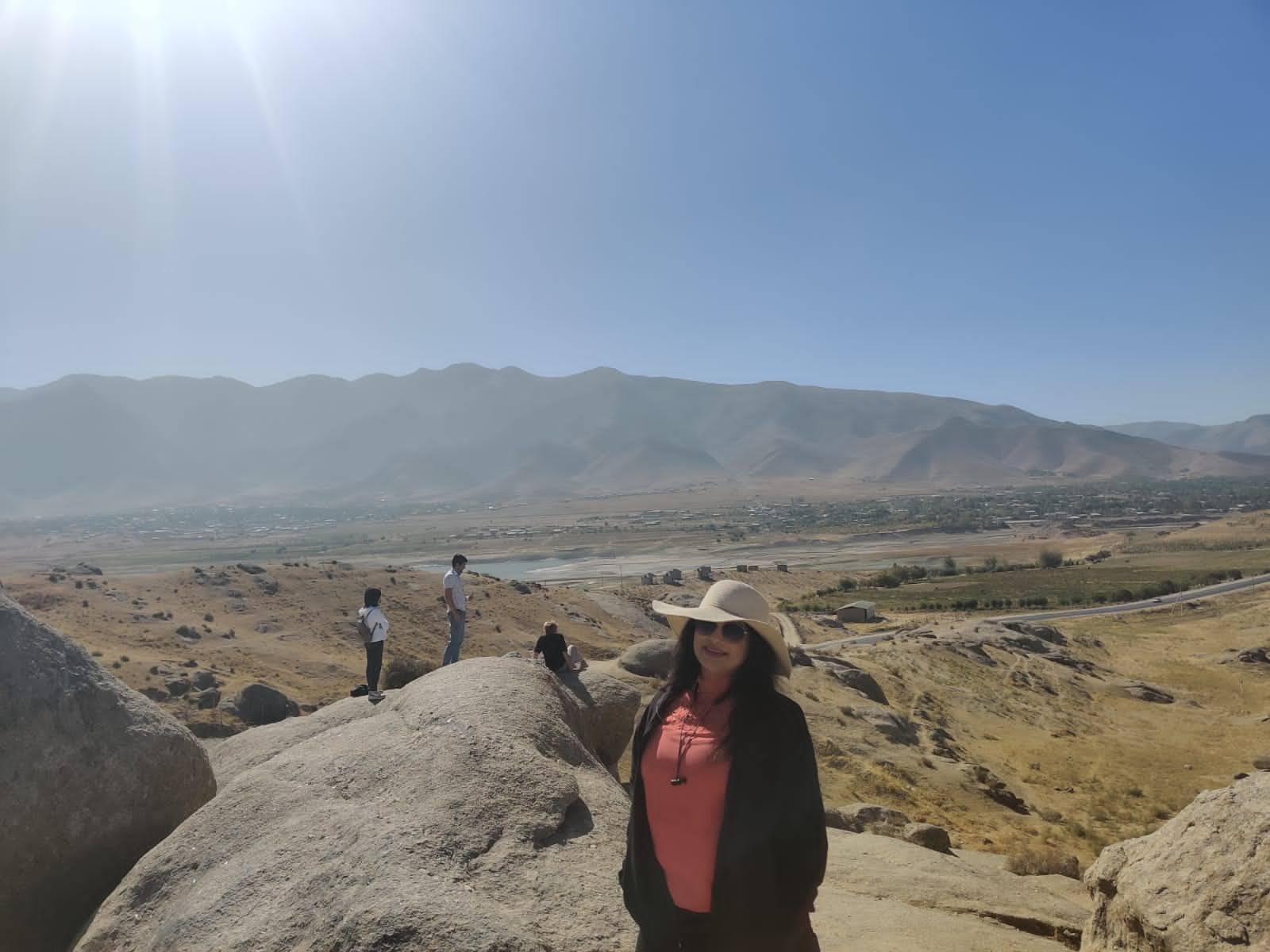
While travelling between Samarkand and Shahrisabz, we passed through the fascinating landscape of Shaitan Zhiga, also known as the “Plateau of Demons.”
Famous for its giant weathered granite boulders naturally shaped over centuries into strange animal-like and abstract forms, the area had a mysterious and almost mythical atmosphere.
Located near the scenic Takhtakaracha Pass, the route also offered breathtaking panoramic views of reservoirs, fertile valleys, and the distant Zarafshan Range.
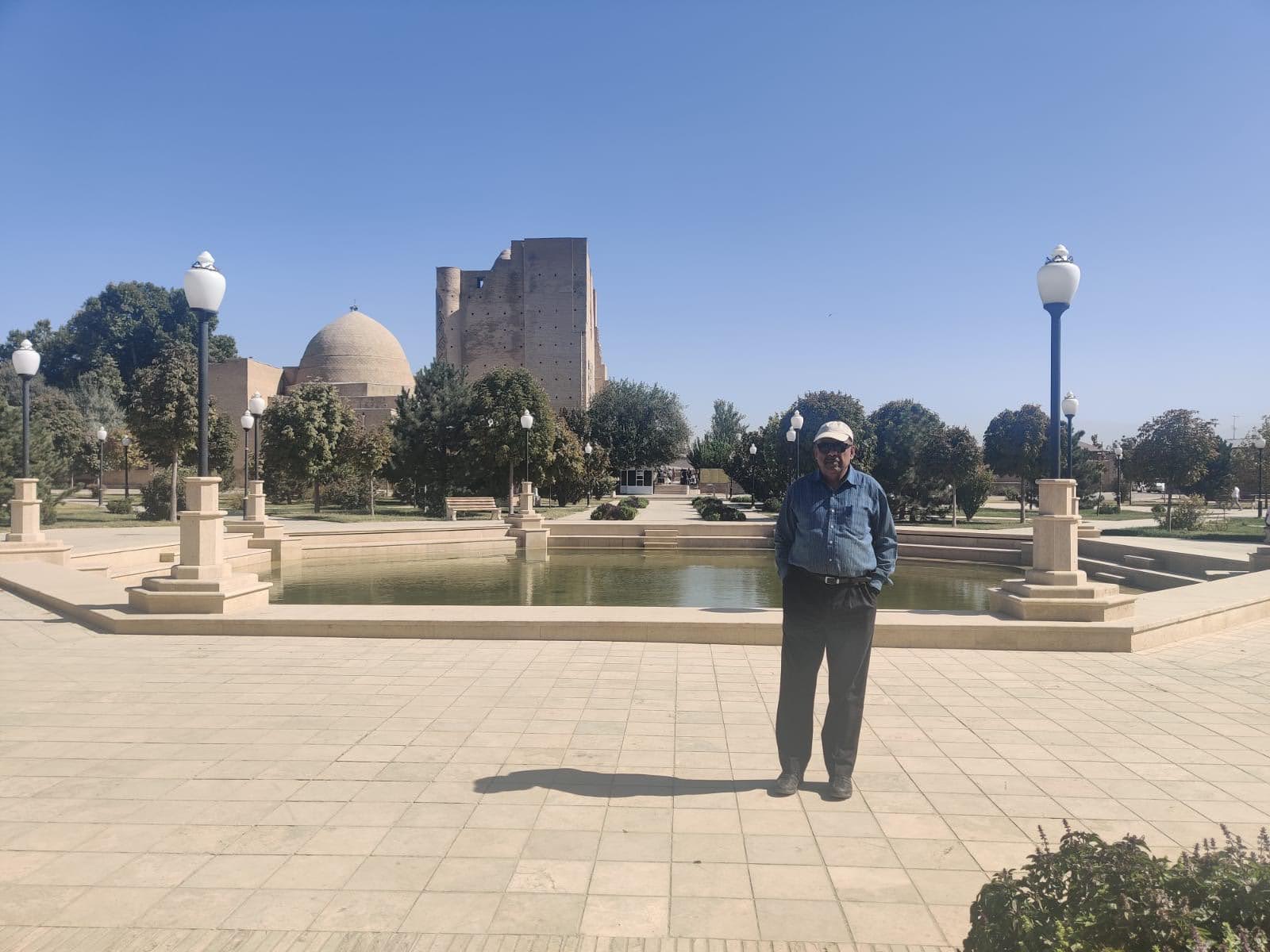
KOK GUMBAZ MOSQUE The Blue Dome of Shakhrisabz
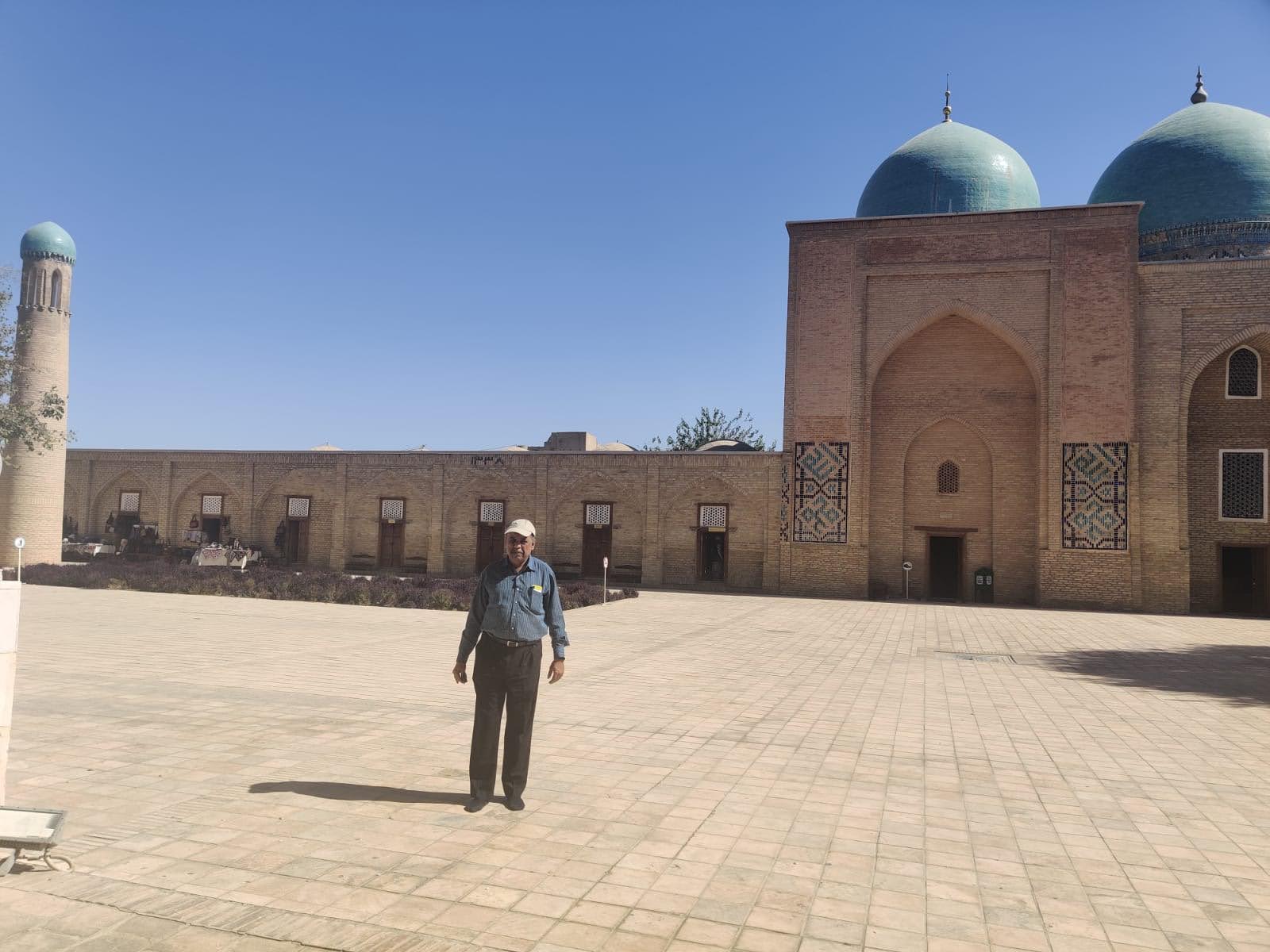
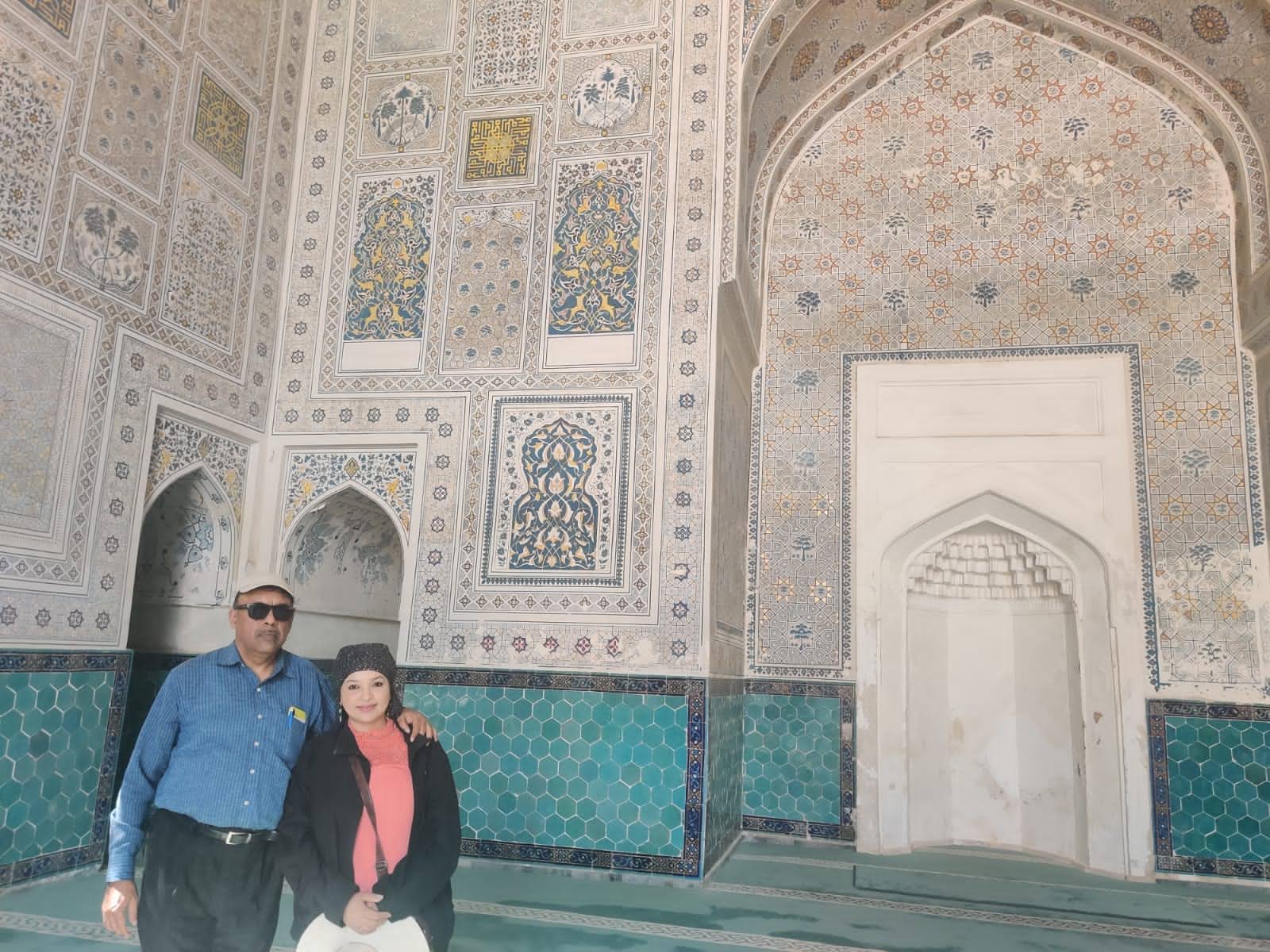
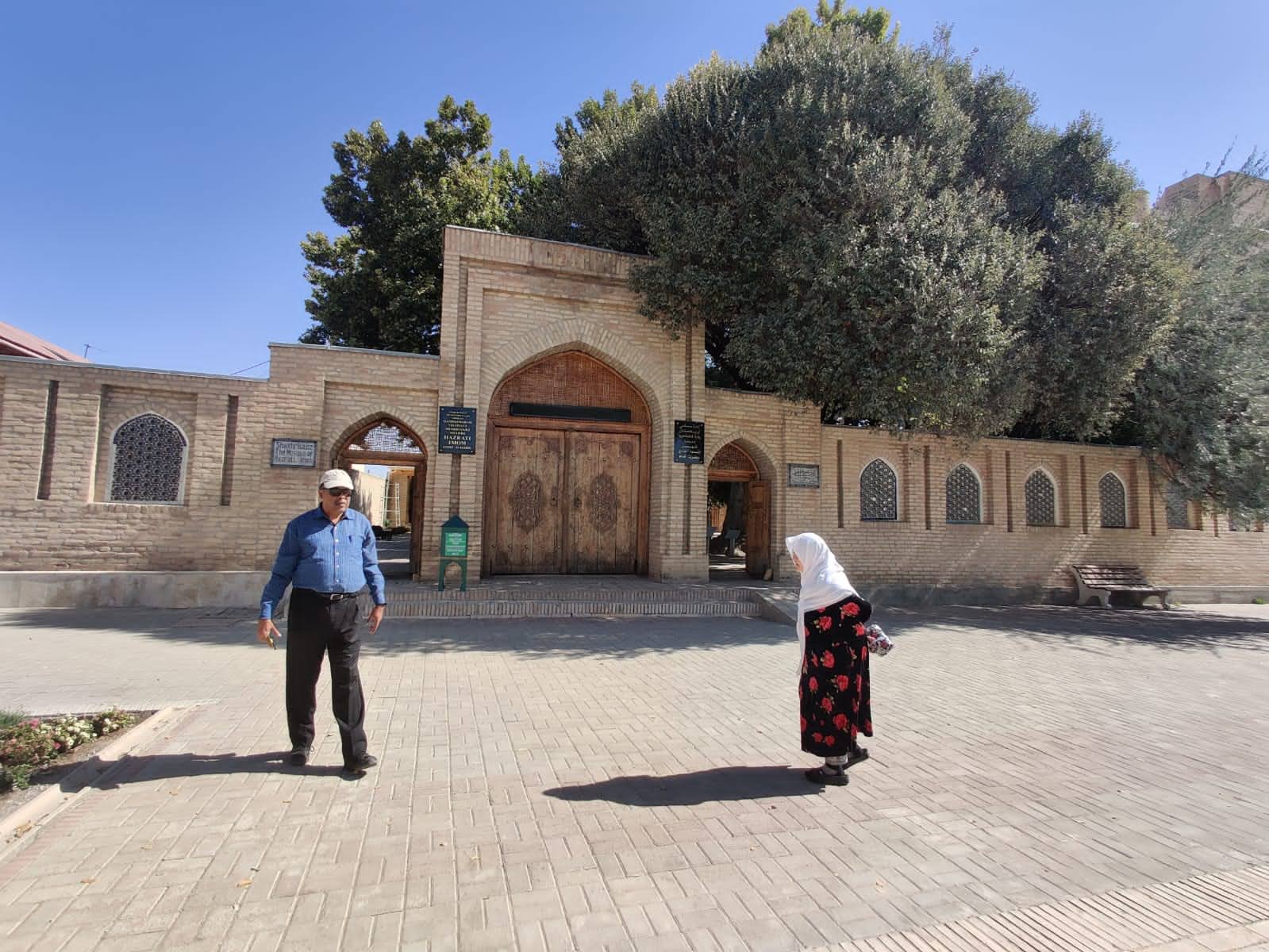
Our visit to the magnificent Kok Gumbaz Mosque in Shahrisabz was another wonderful glimpse into the grandeur of the Timurid era. Built in 1435–36 by Ulugh Beg in honour of his father Shah Rukh, the mosque is instantly recognizable by its magnificent blue dome.
We were especially fascinated by the painted palm tree motifs inside the mosque, believed to be the artistic signature of Indian and Iranian craftsmen, reminding us once again of the deep cultural links created through the ancient Silk Route.
PLOV —The Heart of Uzbek Hospitality
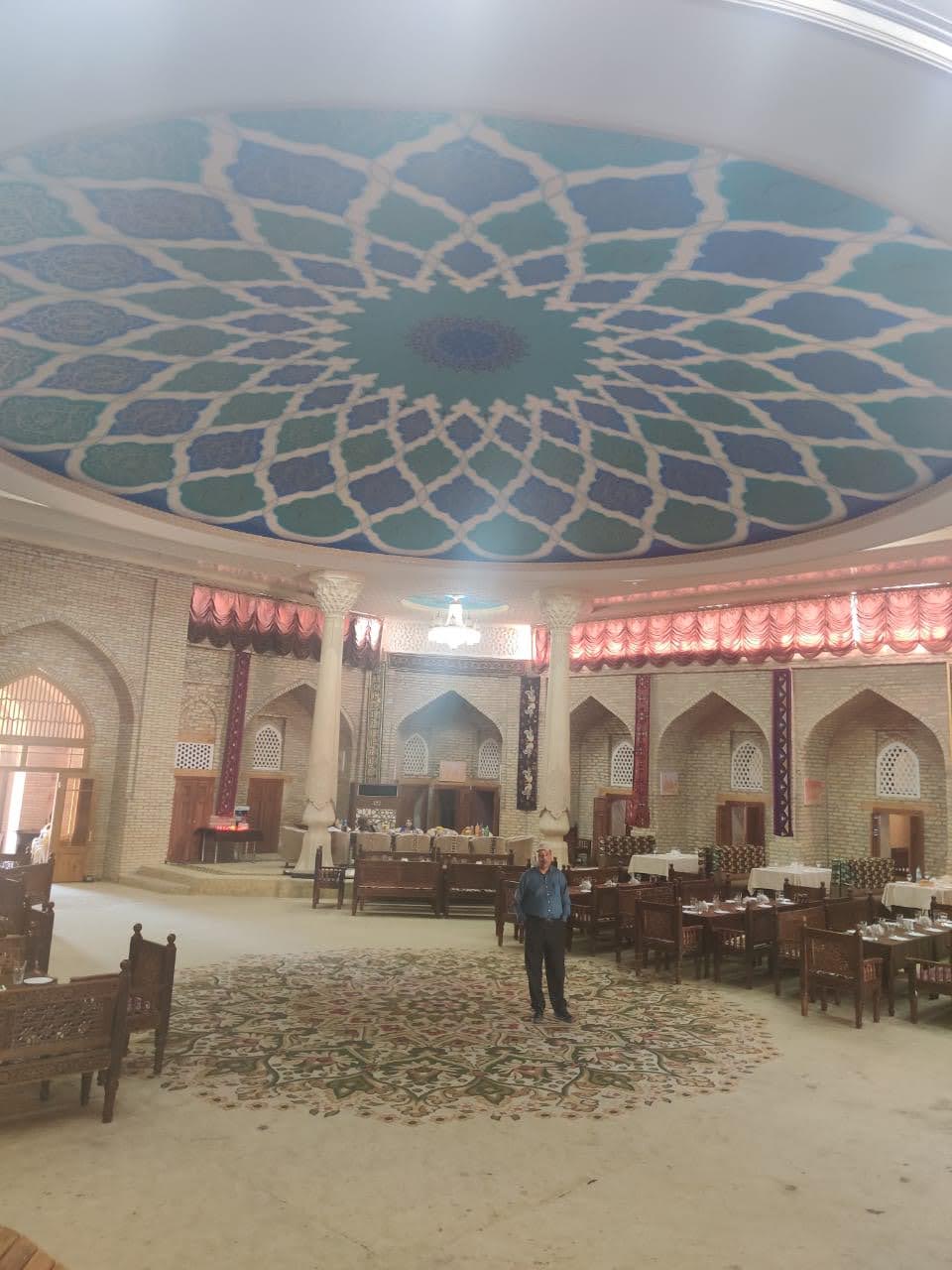
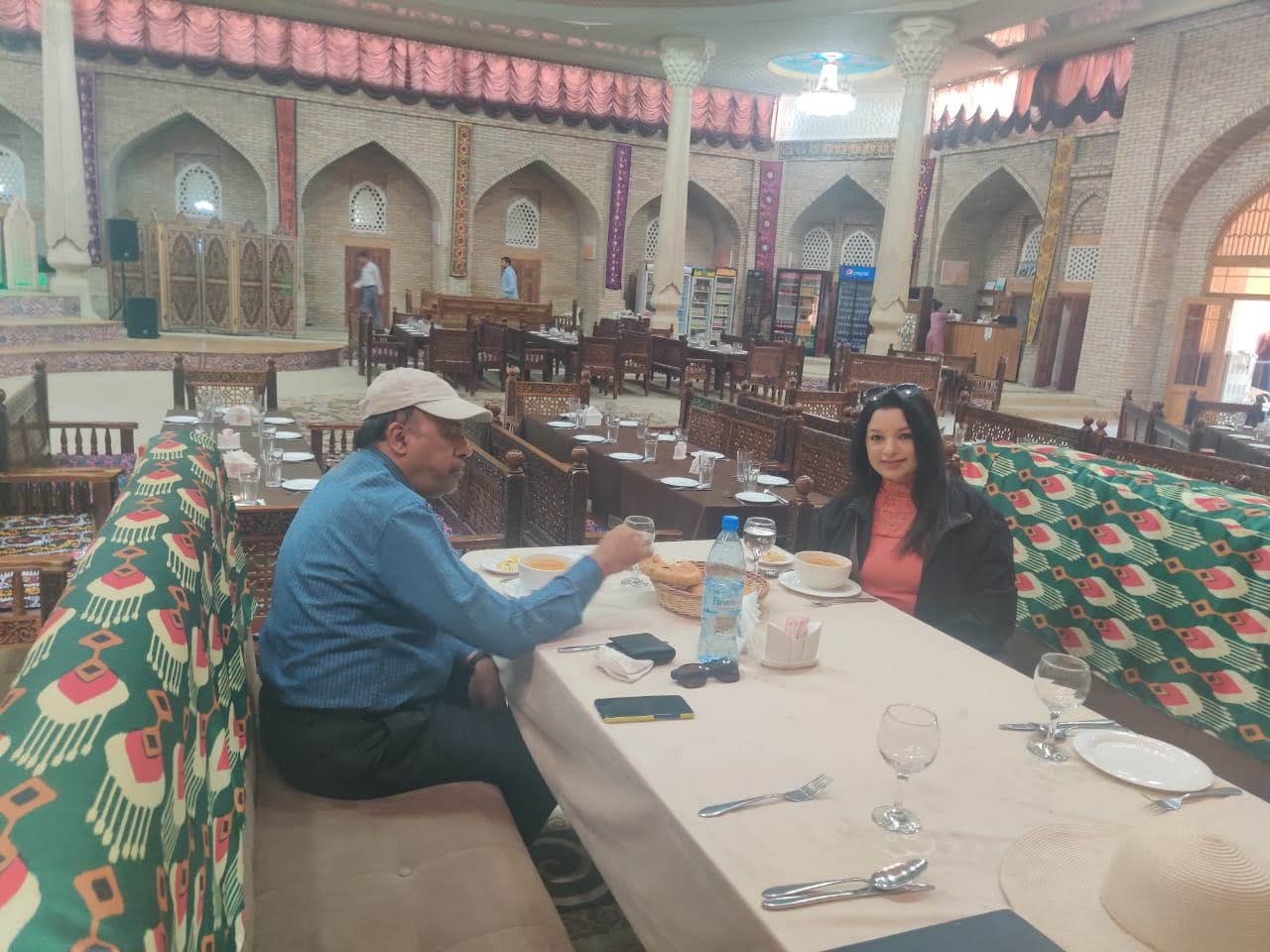
One of the experiences we thoroughly enjoyed in Uzbekistan was eating the famous Plov, the national dish that truly represents the warmth and hospitality of Uzbek culture.
More than just a meal, Plov is considered a social tradition that brings people together during weddings, family gatherings, celebrations, and even funerals.
Richly prepared with rice, vegetables, meat, and aromatic spices, every region has its own variation, and we found it delicious wherever we travelled.
Uzbek Plov vs Indian Pulao
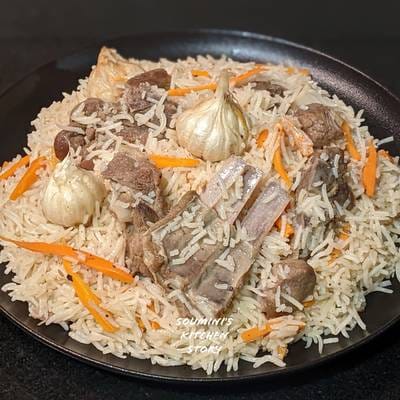
Uzbek Plov
Uzbek Plov, the national dish of Uzbekistan, is richer and more substantial. Traditionally cooked in a large kazan (cauldron), it combines rice with lamb, carrots, onions, and whole garlic bulbs, creating a hearty one-pot meal.
Indian Pulao
Indian Pulao is a fragrant celebration of spices and rice. Prepared with aromatic basmati rice, cardamom, cloves, cinnamon, and often vegetables or meat, it is known for its light texture and delicate flavours.
Uzbek Plov & Indian Pulao
A Love Story on the Silk Road
What makes these two dishes especially fascinating is their connection to the ancient Silk Road. As merchants, travellers, and cultures moved between India and Central Asia over centuries, recipes and cooking traditions travelled with them.
Indian pulao and Uzbek plov may differ in taste and style today, but they share a common culinary heritage forged along the trade routes that linked the bustling markets of India with the great caravan cities of Central Asia.
FROM SHAKHRISABZ TO BUKHARA CONTINUING ALONG THE SILK ROUTE
After thoroughly enjoying the historic city of Shahrisabz and learning about its important role in the Timurid Empire and along the ancient Silk Route, we now continue our journey by bullet train from Samarkand to the remarkable city of Bukhara.
Shahrisabz left a deep impression on us with its connection to Timur, its grand historical monuments, and its peaceful atmosphere away from the larger tourist crowds.Travelling across Uzbekistan by train has itself been a wonderful experience—comfortable, efficient, and scenic. As we move toward Bukhara, one of the greatest trading and cultural centres of the Silk Route, we look forward to discovering yet another chapter of Central Asia's extraordinary history and heritage.
Navigate the Caravan Route
Read Next: Other Dispatches
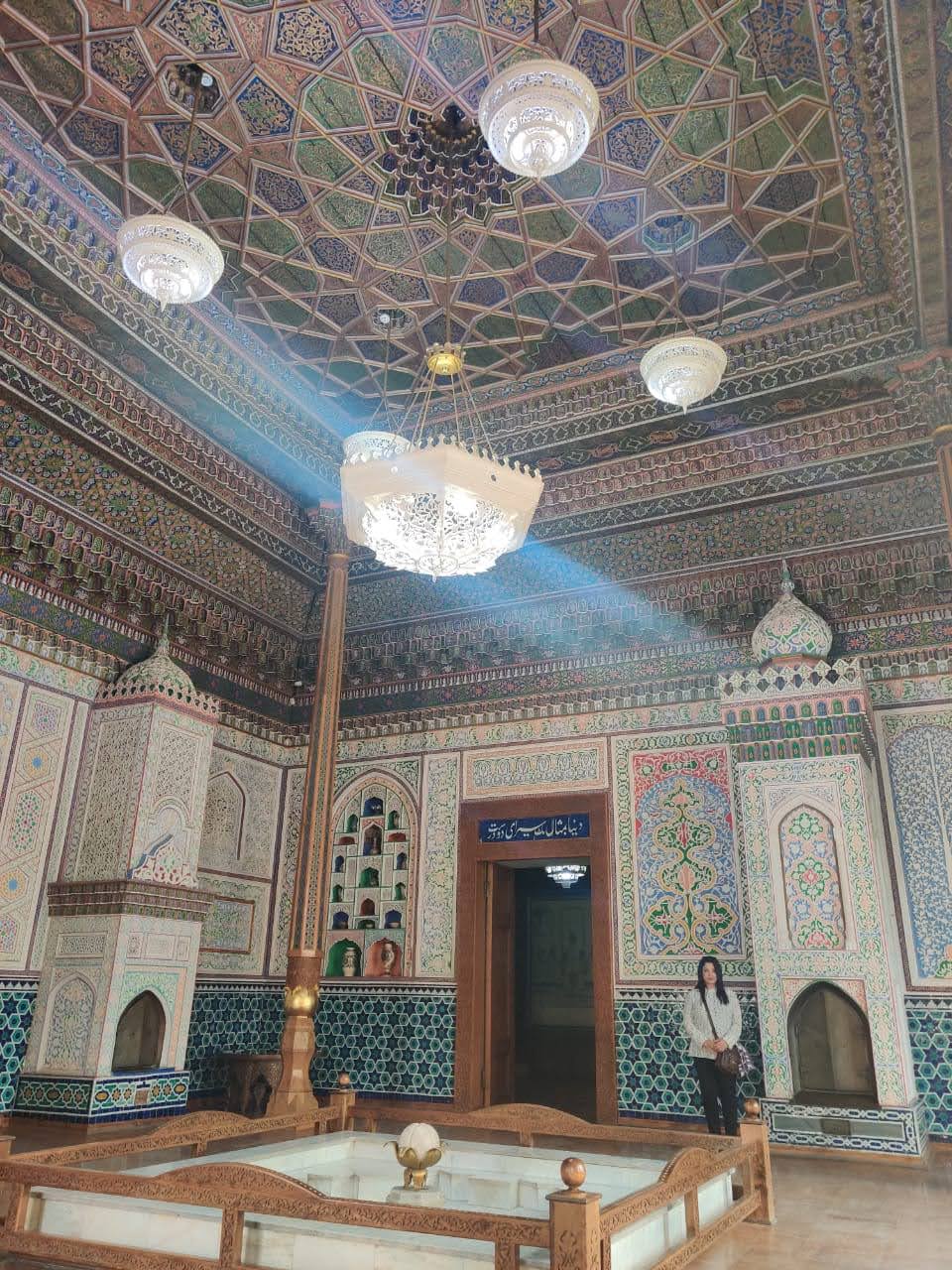
Tashkent
A historic crossroads of the Silk Road that evolved into modern Uzbekistan's dynamic capital.
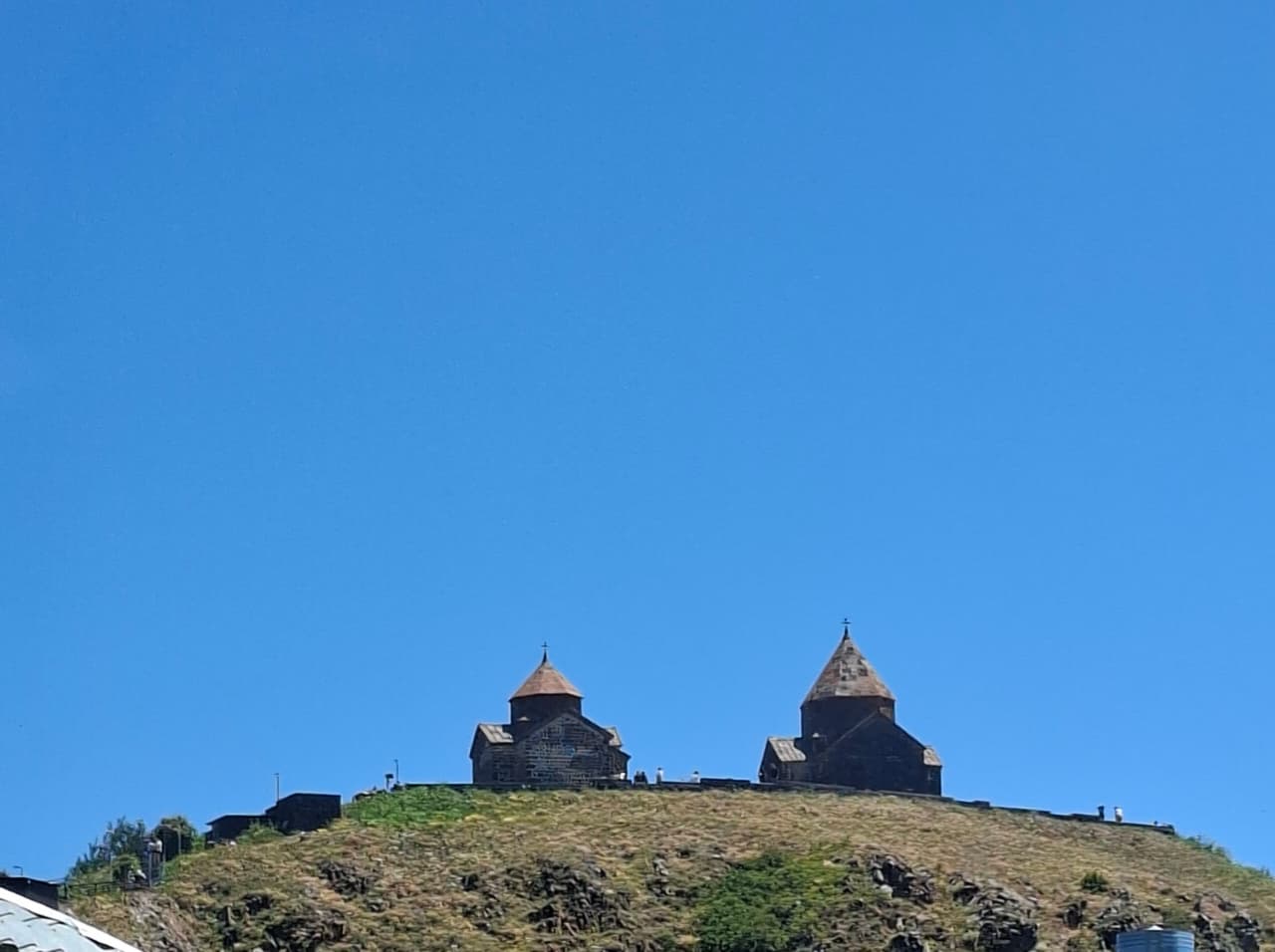
Lake Sevan
A serene alpine lake beside historic trade paths linking the Silk Road to the Caucasus.
Get the complete Field Notebooks in your inbox
Subscribe to receive weekly dispatches detailing train logistics, border crossing forms, and historical accounts from our future travels.